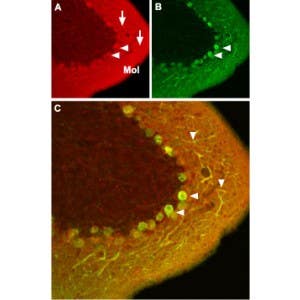
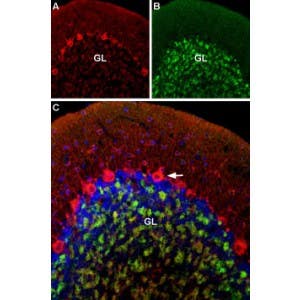
-
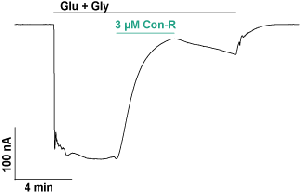
 A potent, competitive antagonist of NMDARs containing either the GluN2A or GluN2B receptor subunit
- Product Code: STC-777
- Applications: Electrophysiology
- CAS No.: 202925-60-8
- MW: 3098 Da
-
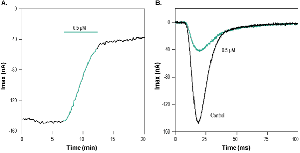 A potent blocker of skeletal muscle NaV1.4 and neuronal NaV1.2 sodium channels, which also inhibits the α3/β2 nAChR
- Product Code: STC-640
- Applications: Electrophysiology
- MW: 2376 Da
-
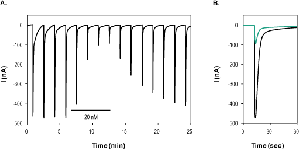 A potent and selective antagonist of the muscle-type nicotinic acetylcholine receptor (nAChR)
- Product Code: STC-620
- Short Description: A potent and selective antagonist of the muscle-type nicotinic acetylcholine receptor (nAChR)
- Applications: Electrophysiology
- MW: 3541 Da
-
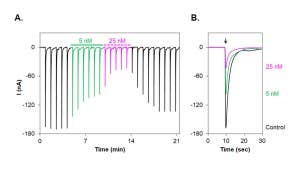 A potent and selective antagonist of the muscle-type nicotinic acetylcholine receptor (nAChR)
- Product Code: STC-600
- Short Description: A potent and selective antagonist of the muscle-type nicotinic acetylcholine receptor (nAChR)
- Applications: Electrophysiology
- MW: 2649 Da
-
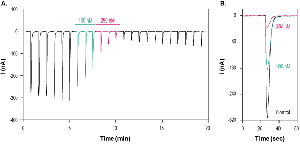 A potent antagonist of muscle α1/β1/γ/δ nicotinic acetylcholine receptors (nAChRs)
- Product Code: STC-520
- Short Description: A potent antagonist of muscle α1/β1/γ/δ nicotinic acetylcholine receptors (nAChRs)
- Applications: Electrophysiology
- CAS No.: 123456
- MW: 1848 Da
-
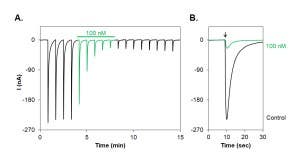 A potent and selective antagonist of the muscle-type nicotinic acetylcholine receptor (nAChR)
- Product Code: STC-500
- Short Description: A potent and selective antagonist of the muscle-type nicotinic acetylcholine receptor (nAChR)
- Applications: Electrophysiology
- CAS No.: 76862-65-2
- MW: 1437.6 Da
-
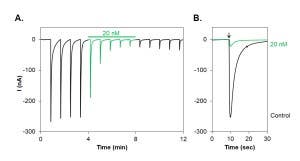 A potent antagonist of muscle α1/β1/γ/δ nicotinic acetylcholine receptors (nAChRs)
- Product Code: STC-370
- Short Description: A potent antagonist of muscle α1/β1/γ/δ nicotinic acetylcholine receptors (nAChRs)
- Applications: Electrophysiology
- CAS No.: 83481-45-2
- MW: 1493.7 Da
-
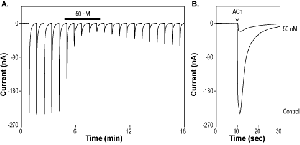 A potent antagonist of muscle α1/β1/γ/δ nicotinic acetylcholine receptors (nAChRs)
- Product Code: STC-230
- Short Description: A potent antagonist of muscle α1/β1/γ/δ nicotinic acetylcholine receptors (nAChRs)
- Applications: Electrophysiology
- MW: 1754.5 Da
-
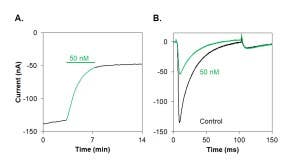 A potent blocker of multiple voltage-gated sodium NaV channels, showing highest affinity for the skeletal muscle NaV1.4 subtype
- Product Code: STC-130
- Applications: Electrophysiology
- MW: 2437 Da
-
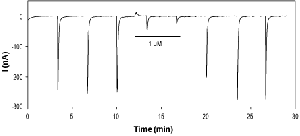 An antagonist of muscle α1/β1/γ/δ nicotinic acetylcholine receptors (nAChR)
- Product Code: STA-100
- Short Description: An antagonist of muscle α1/β1/γ/δ nicotinic acetylcholine receptors (nAChR)
- Applications: Electrophysiology
- CAS No.: 1391936-86-9
- MW: 2541 Da
Loading...