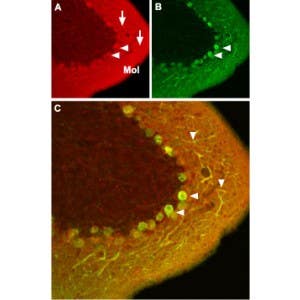
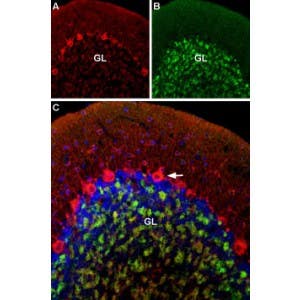
-
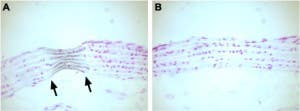 A Rabbit Polyclonal Antibody to CaV1.2a (CACNA1C) Channel
- Product Code: ACC-013
- Short Description: A Rabbit Polyclonal Antibody to CaV1.2a (CACNA1C) Channel
- Host: Rabbit
- Reactivity: Human, Rat, Mouse
- Applications: Western blot, Immunocytochemistry, Immunofluorescence, Immunoprecipitation, Immunohistochemistry
-
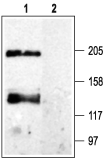 A Rabbit Pan Polyclonal Antibody to CaV1 and CaV2 Subunits
- Product Code: ACC-004
- Short Description: A Rabbit Pan Polyclonal Antibody to CaV1 and CaV2 Subunits
- Host: Rabbit
- Reactivity: Human, Rat, Mouse
- Applications: Western blot, Immunofluorescence, Immunoprecipitation, Immunohistochemistry
-
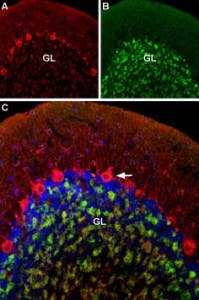 A Guinea Pig Polyclonal Antibody to CaV1.2 (CACNA1C) Channel
- Product Code: ACC-003-GP
- Short Description: A Guinea Pig Polyclonal Antibody to CaV1.2 (CACNA1C) Channel
- Host: Guinea Pig
- Reactivity: Human, Rat, Mouse
- Applications: Western blot, Immunofluorescence, Immunohistochemistry
- Target: Voltage-dependent L-type calcium channel subunit α1C
-
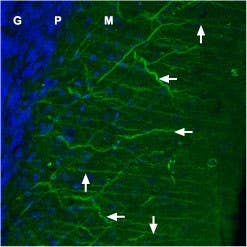
 A Rabbit Polyclonal Antibody to CaV1.2 (CACNA1C) Channel Conjugated to the Fluorescent Dye ATTO-488
- Product Code: ACC-003-AG
- Short Description: A Rabbit Polyclonal Antibody to CaV1.2 (CACNA1C) Channel Conjugated to the Fluorescent Dye ATTO-488
- Host: Rabbit
- Reactivity: Human, Rat, Mouse
- Applications: Immunocytochemistry, Immunofluorescence, Immunohistochemistry
- Target: Voltage-dependent L-type calcium channel subunit α1C
-
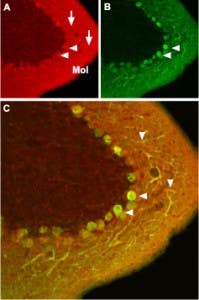 A Rabbit Polyclonal Antibody to CaV1.2 (CACNA1C) Channel
- Product Code: ACC-003
- Short Description: A Rabbit Polyclonal Antibody to CaV1.2 (CACNA1C) Channel
- Host: Rabbit
- Reactivity: Human, Rat, Mouse
- Applications: Indirect flow cytometry, Western blot, Immunocytochemistry, Immunofluorescence, Immunohistochemistry
- Target: Voltage-dependent L-type calcium channel subunit α1C
Loading...