-
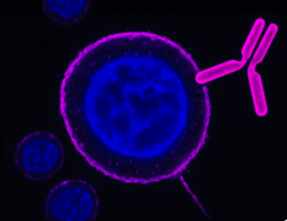
 A Rabbit Polyclonal Antibody to CNIH2 and CNIH3
- Product Code: AGC-047
- Short Description: A Rabbit Polyclonal Antibody to CNIH2 and CNIH3
- Host: Rabbit
- Label: Unconjugated
- Reactivity: Rat, Mouse
- Applications: Western blot
- Target: Cornichon homolog 2, Cornichon homolog 3, Cornichon family AMPA receptor auxiliary protein 2, Cornichon family AMPA receptor auxiliary protein 3
-
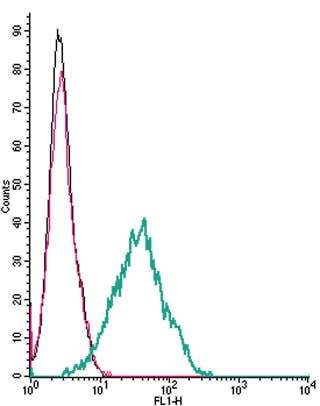 A Rabbit Polyclonal Antibody to CNTF Receptor α
- Product Code: ACR-051
- Short Description: A Rabbit Polyclonal Antibody to CNTF Receptor α
- Host: Rabbit
- Label: Unconjugated
- Reactivity: Human, Rat, Mouse
- Applications: Indirect flow cytometry, Live cell imaging, Western blot, Immunofluorescence, Immunohistochemistry
- Target: Ciliary neurotrophic factor receptor subunit alpha, CNTF receptor alpha, CNTFR alpha
-
 A Rabbit Polyclonal Antibody to Connexin-29
- Product Code: ACC-223
- Short Description: A Rabbit Polyclonal Antibody to Connexin-29
- Host: Rabbit
- Label: Unconjugated
- Reactivity: Rat, Mouse
- Applications: Western blot
- Target: CX29, Gap junction γ3 protein, Gap junction ε1 protein, GJC3, GJE1
-
 A Rabbit Polyclonal Antibody to Contactin-1 (extracellular)
- Product Code: ANR-171
- Short Description: A Rabbit Polyclonal Antibody to Contactin-1 (extracellular)
- Host: Rabbit
- Label: Unconjugated
- Reactivity: Human, Rat, Mouse
- Applications: Western blot, Immunofluorescence, Immunohistochemistry
- Target: Neural cell surface protein F3, Glycoprotein GP135, CNTN1
-
 A Rabbit Polyclonal Antibody to Contactin-2 (extracellular)
- Product Code: ANR-172
- Short Description: A Rabbit Polyclonal Antibody to Contactin-2 (extracellular)
- Host: Rabbit
- Label: Unconjugated
- Reactivity: Human, Rat, Mouse
- Applications: Western blot, Immunohistochemistry
- Target: Axonal glycoprotein TAG-1, Axonin-1, Transient axonal glycoprotein 1, TAX-1
-
 A Rabbit Polyclonal Antibody to Corticotropin-Releasing Factor Receptor 1
- Product Code: ACR-050
- Short Description: A Rabbit Polyclonal Antibody to Corticotropin-Releasing Factor Receptor 1
- Host: Rabbit
- Label: Unconjugated
- Reactivity: Human, Rat, Mouse
- Applications: Indirect flow cytometry, Live cell imaging, Western blot, Immunofluorescence, Immunohistochemistry
- Target: Corticotropin-releasing factor receptor 1, CRFR1, Corticotropin-releasing hormone receptor 1, CRH-R1, CRH1
-
 A Rabbit Polyclonal Antibody to Corticotropin-Releasing Factor Receptor 1 Conjugated to the Fluorescent Dye FITC
- Product Code: ACR-050-F
- Short Description: A Rabbit Polyclonal Antibody to Corticotropin-Releasing Factor Receptor 1 Conjugated to the Fluorescent Dye FITC
- Host: Rabbit
- Label: FITC
- Reactivity: Human, Rat, Mouse
- Applications: Live cell imaging, Flow cytometry
- Target: Corticotropin-releasing factor receptor 1, CRFR1, Corticotropin-releasing hormone receptor 1, CRH-R1, CRH1
-
 A Rabbit Polyclonal Antibody to Corticotropin-Releasing Factor Receptor 2
- Product Code: ACR-052
- Short Description: A Rabbit Polyclonal Antibody to Corticotropin-Releasing Factor Receptor 2
- Host: Rabbit
- Label: Unconjugated
- Reactivity: Human, Rat, Mouse
- Applications: Indirect flow cytometry, Live cell imaging, Western blot
- Target: Corticotropin-releasing factor receptor 2, CRF-R-2, CRF2 receptor beta isoform, Corticotropin-releasing hormone receptor 2, CRH receptor 2 variant B
-
 A Rabbit Polyclonal Antibody to Calcitonin Receptor-Like Receptor
- Product Code: ACR-060
- Short Description: A Rabbit Polyclonal Antibody to Calcitonin Receptor-Like Receptor
- Host: Rabbit
- Label: Unconjugated
- Reactivity: Human, Rat, Mouse
- Applications: Indirect flow cytometry, Live cell imaging, Western blot, Immunohistochemistry
- Target: Calcitonin Receptor-Like Receptor, Calcitonin Gene-Related Peptide Type 1 Receptor, CRL, CGRPR
-
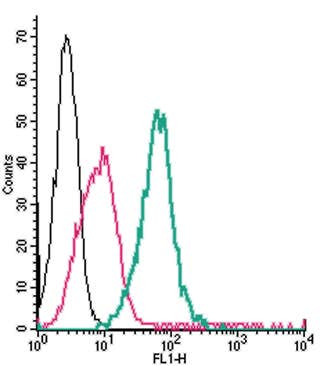 A Rabbit Polyclonal Antibody to CRLR/CALCRL (extracellular) conjugated to the fluorescent dye FITC
- Product Code: ACR-060-F
- Short Description: A Rabbit Polyclonal Antibody to CRLR/CALCRL (extracellular) conjugated to the fluorescent dye FITC
- Host: Rabbit
- Label: FITC
- Reactivity: Human, Rat, Mouse
- Applications: Live cell imaging, Flow cytometry
- Target: Calcitonin Receptor-Like Receptor, Calcitonin Gene-Related Peptide Type 1 Receptor, CRL, CGRPR
Loading...