-
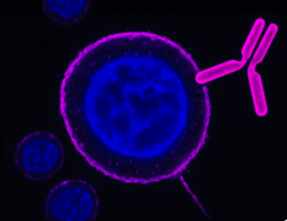
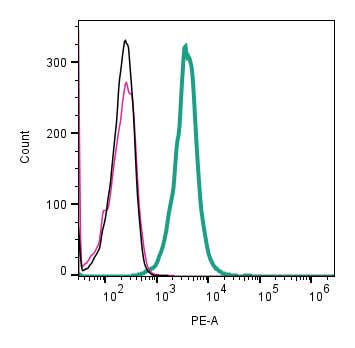 A Rabbit Polyclonal Antibody to Calcitonin Receptor-Like Receptor conjugated to the fluorescent dye R-Phycoerythrin
- Product Code: ACR-060-PE
- Short Description: A Rabbit Polyclonal Antibody to Calcitonin Receptor-Like Receptor conjugated to the fluorescent dye R-Phycoerythrin
- Host: Rabbit
- Label: R-PE
- Reactivity: Human, Rat, Mouse
- Applications: Live cell imaging, Flow cytometry
- Target: Calcitonin Receptor-Like Receptor, Calcitonin Gene-Related Peptide Type 1 Receptor, CRL, CGRPR
-
 A Rabbit Polyclonal Antibody to Prostanoid DP2 Receptor (CRTH2, GPR44)
- Product Code: APR-062
- Short Description: A Rabbit Polyclonal Antibody to Prostanoid DP2 Receptor (CRTH2, GPR44)
- Host: Rabbit
- Label: Unconjugated
- Reactivity: Rat, Mouse
- Applications: Indirect flow cytometry, Live cell imaging, Western blot, Immunofluorescence, Immunohistochemistry
- Target: Prostanoid DP2 receptor, Prostaglandin D2 receptor 2, PTGDR2, CD294
-
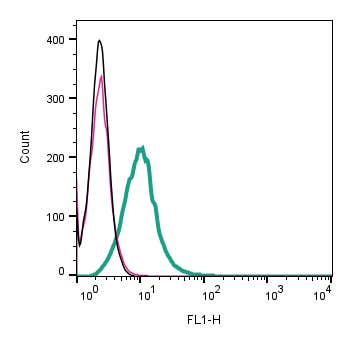 A Rabbit Polyclonal antibody to CTL1 (SLC44A1) (extracellular)
- Product Code: ACT-021
- Short Description: A Rabbit Polyclonal antibody to CTL1 (SLC44A1) (extracellular)
- Host: Rabbit
- Label: Unconjugated
- Reactivity: Human, Rat, Mouse
- Applications: Indirect flow cytometry, Live cell imaging, Western blot
- Target: Choline Transporter-Like Protein 1, Solute carrier family 44 member 1, CD92
-
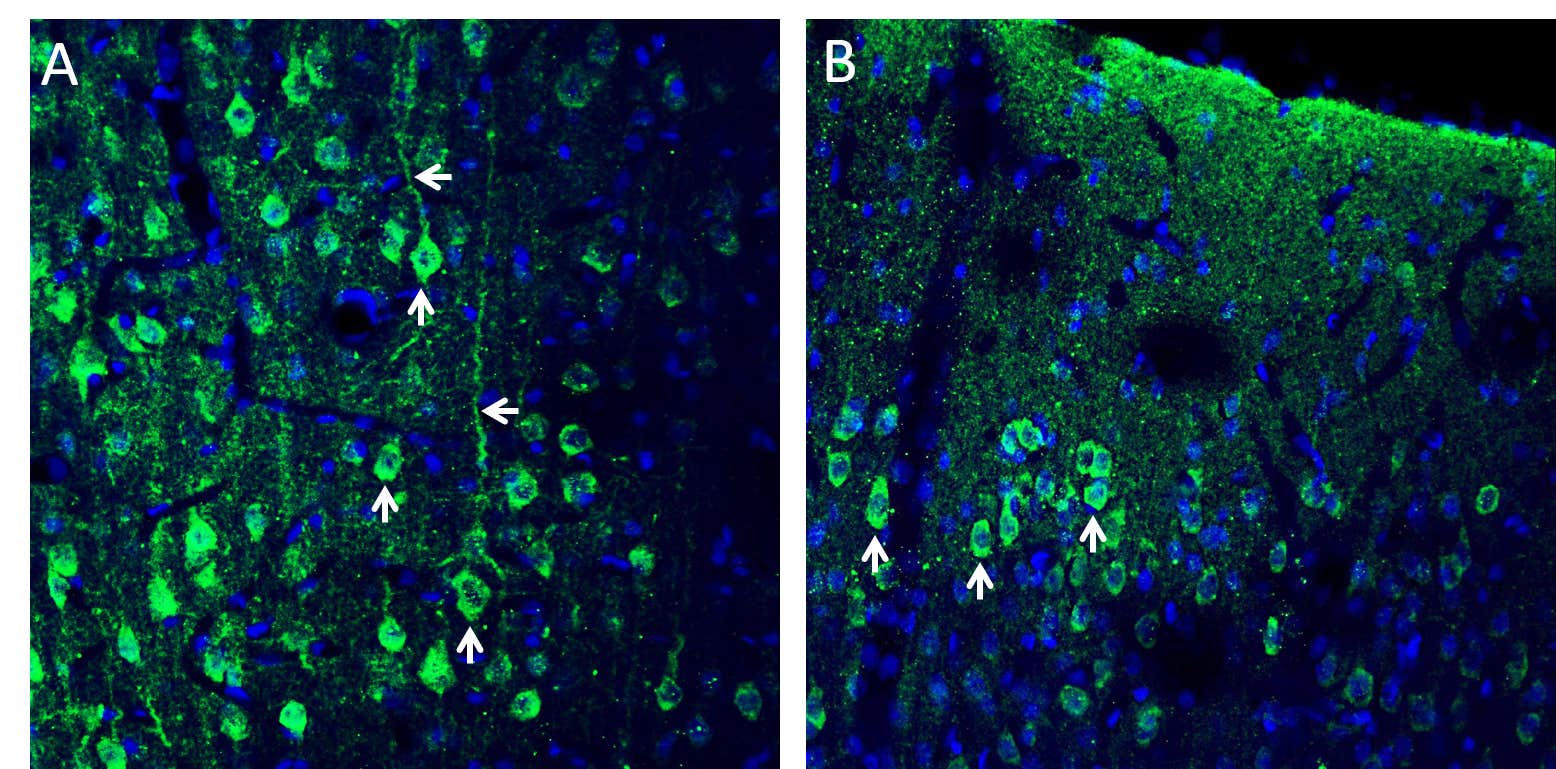 A Rabbit Polyclonal Antibody to CX3CL1
- Product Code: ACR-057
- Short Description: A Rabbit Polyclonal Antibody to CX3CL1
- Host: Rabbit
- Label: Unconjugated
- Reactivity: Human, Rat, Mouse
- Applications: Western blot, Immunofluorescence, Immunohistochemistry
- Target: Fractalkine, C-X3-C motif chemokine 1, CX3C membrane-anchored chemokine, Neurotactin, Small-inducible cytokine D1, FKN, NTT, SCYD1
-
 A Rabbit Polyclonal Antibody to CX3CR1 Receptor
- Product Code: ACR-058
- Short Description: A Rabbit Polyclonal Antibody to CX3CR1 Receptor
- Host: Rabbit
- Label: Unconjugated
- Reactivity: Rat, Mouse
- Applications: Indirect flow cytometry, Live cell imaging, Western blot, Immunohistochemistry
- Target: Fractalkine Receptor, CX3C chemokine receptor 1, C-X3-C CKR-1, C-X3-C motif chemokine receptor 1, GPR13, CMKBRL1, GPRV28, V28, G-protein coupled receptor 13, CCRL1, Beta chemokine receptor-like 1
-
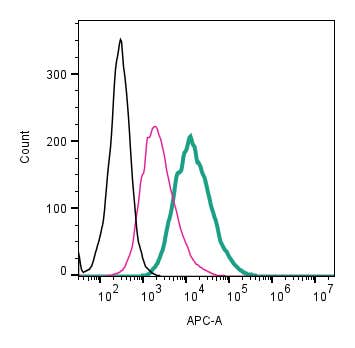 A Rabbit Polyclonal Antibody to CX3CR1 (extracellular) conjugated to the fluorescent dye Allophycocyanin (APC)
- Product Code: ACR-058-APC
- Short Description: A Rabbit Polyclonal Antibody to CX3CR1 (extracellular) conjugated to the fluorescent dye Allophycocyanin (APC)
- Host: Rabbit
- Label: APC
- Reactivity: Rat, Mouse
- Applications: Live cell imaging, Flow cytometry
- Target: Fractalkine Receptor, CX3C chemokine receptor 1, C-X3-C CKR-1, C-X3-C motif chemokine receptor 1, GPR13, CMKBRL1, GPRV28, V28, G-protein coupled receptor 13, CCRL1, Beta chemokine receptor-like 1
-
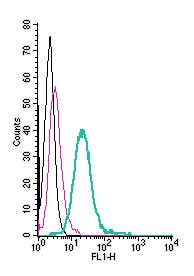 A Rabbit Polyclonal Antibody to CX3CR1 (extracellular) conjugated to the fluorescent dye FITC
- Product Code: ACR-058-F
- Short Description: A Rabbit Polyclonal Antibody to CX3CR1 (extracellular) conjugated to the fluorescent dye FITC
- Host: Rabbit
- Label: FITC
- Reactivity: Rat, Mouse
- Applications: Live cell imaging, Flow cytometry
- Target: Fractalkine Receptor, CX3C chemokine receptor 1, C-X3-C CKR-1, C-X3-C motif chemokine receptor 1, GPR13, CMKBRL1, GPRV28, V28, G-protein coupled receptor 13, CCRL1, Beta chemokine receptor-like 1
-
 A Rabbit Polyclonal Antibody to CXCR4 Chemokine Receptor
- Product Code: ACR-014
- Short Description: A Rabbit Polyclonal Antibody to CXCR4 Chemokine Receptor
- Host: Rabbit
- Label: Unconjugated
- Reactivity: Human, Rat, Mouse
- Applications: Indirect flow cytometry, Live cell imaging, Western blot, Immunocytochemistry, Immunofluorescence, Immunohistochemistry
- Target: C-X-C chemokine receptor type 4, CD184, Fusin, LESTR, NPYRL, SDF-1 receptor, WHIMS
-
 A Rabbit Polyclonal Antibody to CXCR4 Chemokine Receptor Conjugated to the Fluorescent Dye ATTO-488
- Product Code: ACR-014-AG
- Short Description: A Rabbit Polyclonal Antibody to CXCR4 Chemokine Receptor Conjugated to the Fluorescent Dye ATTO-488
- Host: Rabbit
- Label: ATTO 488
- Reactivity: Human, Rat, Mouse
- Applications: Live cell imaging, Flow cytometry
- Target: C-X-C chemokine receptor type 4, CD184, Fusin, LESTR, NPYRL, SDF-1 receptor, WHIMS
-
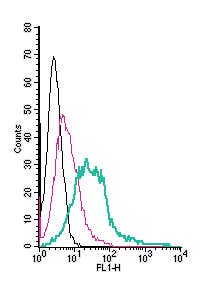 A Rabbit Polyclonal Antibody to CXCR4 (extracellular) conjugated to the fluorescent dye FITC
- Product Code: ACR-014-F
- Short Description: A Rabbit Polyclonal Antibody to CXCR4 (extracellular) conjugated to the fluorescent dye FITC
- Host: Rabbit
- Label: FITC
- Reactivity: Human, Rat, Mouse
- Applications: Live cell imaging, Flow cytometry
- Target: C-X-C chemokine receptor type 4, CD184, Fusin, LESTR, NPYRL, SDF-1 receptor, WHIMS
Loading...