-
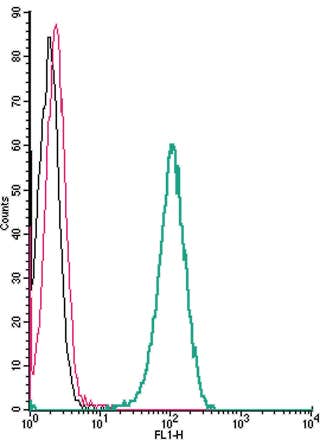 A Rabbit Polyclonal Antibody to CXCR7 Chemokine Receptor
- Product Code: ACR-037
- Short Description: A Rabbit Polyclonal Antibody to CXCR7 Chemokine Receptor
- Host: Rabbit
- Label: Unconjugated
- Reactivity: Human, Rat, Mouse
- Applications: Indirect flow cytometry, Live cell imaging, Western blot
- Target: Atypical chemokine receptor 3, C-X-C chemokine receptor type 7, CXCR-7, Chemokine orphan receptor 1, G-protein coupled receptor RDC1 homolog, CMKOR1, GPR159
-
 A Rabbit Polyclonal Antibody to CXCR7 Chemokine Receptor Conjugated to the Fluorescent Dye ATTO-488
- Product Code: ACR-037-AG
- Short Description: A Rabbit Polyclonal Antibody to CXCR7 Chemokine Receptor Conjugated to the Fluorescent Dye ATTO-488
- Host: Rabbit
- Label: ATTO 488
- Reactivity: Human, Rat, Mouse
- Applications: Live cell imaging, Flow cytometry, Immunohistochemistry
- Target: Atypical chemokine receptor 3, C-X-C chemokine receptor type 7, CXCR-7, Chemokine orphan receptor 1, G-protein coupled receptor RDC1 homolog, CMKOR1, GPR159
-
 A Rabbit Polyclonal Antibody to CysLTR1
- Product Code: ALR-003
- Short Description: A Rabbit Polyclonal Antibody to CysLTR1
- Host: Rabbit
- Label: Unconjugated
- Reactivity: Human
- Applications: Indirect flow cytometry, Western blot
- Target: CYSLT1, Cysteinyl leukotriene receptor 1, Cysteinyl leukotriene D4 receptor, LTD4 receptor, G-protein coupled receptor HG55, HMTMF81
-
 A Rabbit Polyclonal Antibody to CysLTR1 Conjugated to the Fluorescent Dye FITC
- Product Code: ALR-003-F
- Short Description: A Rabbit Polyclonal Antibody to CysLTR1 Conjugated to the Fluorescent Dye FITC
- Host: Rabbit
- Label: FITC
- Reactivity: Human, Rat
- Applications: Flow cytometry
- Target: CYSLT1, Cysteinyl leukotriene receptor 1, Cysteinyl leukotriene D4 receptor, LTD4 receptor, G-protein coupled receptor HG55, HMTMF81
-
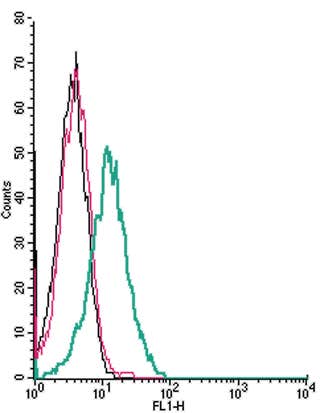 A Rabbit Polyclonal Antibody to D2 Dopamine Receptor
- Product Code: ADR-002
- Short Description: A Rabbit Polyclonal Antibody to D2 Dopamine Receptor
- Host: Rabbit
- Label: Unconjugated
- Reactivity: Human, Rat, Mouse
- Applications: Indirect flow cytometry, Live cell imaging, Western blot, Immunohistochemistry
- Target: DRD2, D(2) dopamine receptor
-
 A Rabbit Polyclonal Antibody to D2 Dopamine Receptor Conjugated to the Fluorescent Dye FITC
- Product Code: ADR-002-F
- Short Description: A Rabbit Polyclonal Antibody to D2 Dopamine Receptor Conjugated to the Fluorescent Dye FITC
- Host: Rabbit
- Label: FITC
- Reactivity: Human, Rat, Mouse
- Applications: Live cell imaging, Flow cytometry
- Target: DRD2, D(2) dopamine receptor
-

 A Rabbit Polyclonal Antibody to D3 Dopamine Receptor
- Product Code: ADR-003
- Short Description: A Rabbit Polyclonal Antibody to D3 Dopamine Receptor
- Host: Rabbit
- Label: Unconjugated
- Reactivity: Human, Rat, Mouse
- Applications: Indirect flow cytometry, Live cell imaging, Western blot, Immunofluorescence, Immunohistochemistry
- Target: DRD3
-
 A Rabbit Polyclonal Antibody to D5 Dopamine Receptor
- Product Code: ADR-005
- Short Description: A Rabbit Polyclonal Antibody to D5 Dopamine Receptor
- Host: Rabbit
- Label: Unconjugated
- Reactivity: Rat, Mouse
- Applications: Indirect flow cytometry, Live cell imaging, Western blot, Immunofluorescence, Immunohistochemistry
- Target: DRD5, D(1B) dopamine receptor
-
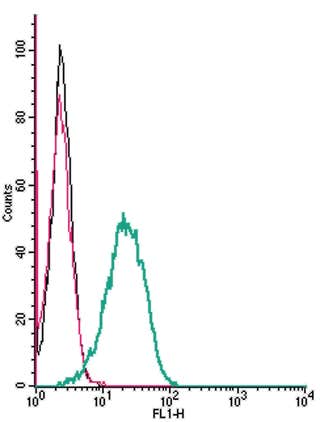 A Rabbit Polyclonal Antibody to Dopamine Transporter (DAT)
- Product Code: AMT-003
- Short Description: A Rabbit Polyclonal Antibody to Dopamine Transporter (DAT)
- Host: Rabbit
- Label: Unconjugated
- Reactivity: Rat, Mouse
- Applications: Indirect flow cytometry, Live cell imaging, Western blot, Immunocytochemistry
- Target: Sodium-dependent dopamine transporter, DA transporter, SLC6A3
-
 A Rabbit Polyclonal Antibody to Dopamine Transporter (DAT) Conjugated to the Fluorescent Dye FITC
- Product Code: AMT-003-F
- Short Description: A Rabbit Polyclonal Antibody to Dopamine Transporter (DAT) Conjugated to the Fluorescent Dye FITC
- Host: Rabbit
- Label: FITC
- Reactivity: Rat, Mouse
- Applications: Live cell imaging, Flow cytometry
- Target: Sodium-dependent dopamine transporter, DA transporter, Solute carrier family 6 member 3, SLC6A3
Loading...