
-

 A Rabbit Polyclonal Antibody to Melanocortin Receptor 4
- Product Code: AMR-024
- Short Description: A Rabbit Polyclonal Antibody to Melanocortin Receptor 4
- Host: Rabbit
- Label: Unconjugated
- Reactivity: Human, Rat, Mouse
- Applications: Live cell imaging, Western blot, Immunocytochemistry, Immunofluorescence, Immunohistochemistry
- Target: Melanocortin receptor 4, MC4R, MC4-R
-
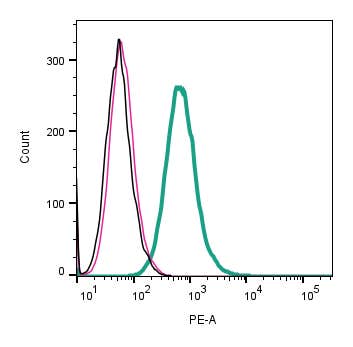 A Rabbit Polyclonal Antibody to Melanin-Concentrating Hormone Receptor 1
- Product Code: AMR-041
- Short Description: A Rabbit Polyclonal Antibody to Melanin-Concentrating Hormone Receptor 1
- Host: Rabbit
- Label: Unconjugated
- Reactivity: Human, Rat, Mouse
- Applications: Live cell imaging, Western blot, Immunocytochemistry, Immunofluorescence
- Target: Melanin-concentrating hormone receptor 1, MCH1, MCH1R, GPR24, Somatostatin receptor-like protein, SLC-1
-
 A Rabbit Polyclonal Antibody to Monocarboxylate Transporter 1
- Product Code: AMT-011
- Short Description: A Rabbit Polyclonal Antibody to Monocarboxylate Transporter 1
- Host: Rabbit
- Label: Unconjugated
- Reactivity: Human, Rat, Mouse
- Applications: Indirect flow cytometry, Live cell imaging, Western blot, Immunofluorescence, Immunohistochemistry
- Target: Monocarboxylate transporter 1, Monocarboxylic acid transporter 1
-
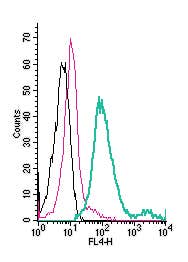 A Rabbit Polyclonal Antibody to MCT1 (extracellular) conjugated to the fluorescent dye Allophycocyanin (APC)
- Product Code: AMT-011-APC
- Short Description: A Rabbit Polyclonal Antibody to MCT1 (extracellular) conjugated to the fluorescent dye Allophycocyanin (APC)
- Host: Rabbit
- Label: APC
- Reactivity: Human, Rat, Mouse
- Applications: Live cell imaging, Flow cytometry
- Target: Monocarboxylate transporter 1, Monocarboxylic acid transporter 1
-
 A Rabbit Polyclonal Antibody to Monocarboxylate Transporter 1 Conjugated to the Fluorescent Dye FITC
- Product Code: AMT-011-F
- Short Description: A Rabbit Polyclonal Antibody to Monocarboxylate Transporter 1 Conjugated to the Fluorescent Dye FITC
- Host: Rabbit
- Label: FITC
- Reactivity: Human, Rat, Mouse
- Applications: Flow cytometry
- Target: Monocarboxylate transporter 1, Monocarboxylic acid transporter 1
-
 A Rabbit Polyclonal antibody to MEGF10 (extracellular)
- Product Code: ANR-205
- Short Description: A Rabbit Polyclonal antibody to MEGF10 (extracellular)
- Host: Rabbit
- Label: Unconjugated
- Reactivity: Human, Rat, Mouse
- Applications: Indirect flow cytometry, Live cell imaging, Western blot, Immunohistochemistry
- Target: Multiple EGF Like Domains 10, Multiple EGF-Like Domains Protein 10
-
 A Rabbit Polyclonal Antibody to MERTK Receptor
- Product Code: ATR-033
- Short Description: A Rabbit Polyclonal Antibody to MERTK Receptor
- Host: Rabbit
- Label: Unconjugated
- Reactivity: Human, Rat, Mouse
- Applications: Indirect flow cytometry, Western blot, Immunofluorescence, Immunohistochemistry
- Target: Receptor tyrosine kinase MerTK, C-Mer Proto-Oncogene Tyrosine Kinase, Mer, Proto-Oncogene C-Mer
-
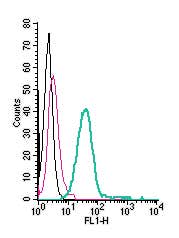 A Rabbit Polyclonal Antibody to MERTK (extracellular) conjugated to the fluorescent dye FITC
- Product Code: ATR-033-F
- Short Description: A Rabbit Polyclonal Antibody to MERTK (extracellular) conjugated to the fluorescent dye FITC
- Host: Rabbit
- Label: FITC
- Reactivity: Human, Rat, Mouse
- Applications: Live cell imaging, Flow cytometry
- Target: Receptor tyrosine kinase MerTK, C-Mer Proto-Oncogene Tyrosine Kinase, Mer, Proto-Oncogene C-Mer
-
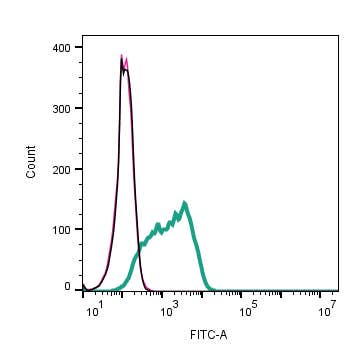 A Rabbit Polyclonal Antibody to Metabotropic Glutamate Receptor 1
- Product Code: AGC-006
- Short Description: A Rabbit Polyclonal Antibody to Metabotropic Glutamate Receptor 1
- Host: Rabbit
- Label: Unconjugated
- Reactivity: Human, Rat, Mouse
- Applications: Indirect flow cytometry, Live cell imaging, Western blot, Immunocytochemistry, Immunofluorescence, Immunoprecipitation
- Target: Metabotropic glutamate receptor 1, GRM1, mGlu1, GPRC1a, PPP1R85, SCAR13
-
 A Rabbit Polyclonal Antibody to Metabotropic Glutamate Receptor 1 Conjugated to the Fluorescent Dye ATTO-488
- Product Code: AGC-006-AG
- Short Description: A Rabbit Polyclonal Antibody to Metabotropic Glutamate Receptor 1 Conjugated to the Fluorescent Dye ATTO-488
- Host: Rabbit
- Label: ATTO 488
- Reactivity: Human, Rat, Mouse
- Applications: Immunofluorescence, Immunohistochemistry
- Target: Metabotropic glutamate receptor 1, GRM1, mGlu1, GPRC1a, PPP1R85, SCAR13
Loading...