-
 A Guinea Pig Polyclonal Antibody to AMPA-Selective Glutamate Receptor 3 (GluR3)
- Product Code: AGC-010-GP
- Short Description: A Guinea Pig Polyclonal Antibody to AMPA-Selective Glutamate Receptor 3 (GluR3)
- Host: Guinea Pig
- Label: Unconjugated
- Reactivity: Human, Rat, Mouse
- Applications: Western blot, Immunofluorescence, Immunohistochemistry
- Target: AMPA receptor 3, Glutamate receptor 3, Ionotropic glutamate receptor 3, AMPA-selective glutamate receptor 3, GRIA3, GluR-C, GluR-K3
-
 A Guinea Pig Polyclonal Antibody to KV1.3 (KCNA3) Channel
- Product Code: APC-101-GP
- Short Description: A Guinea Pig Polyclonal Antibody to KV1.3 (KCNA3) Channel
- Host: Guinea Pig
- Label: Unconjugated
- Reactivity: Human, Rat, Mouse
- Applications: Western blot, Immunofluorescence, Immunohistochemistry
- Target: Potassium voltage-gated channel subfamily A member 3
-
 A Guinea Pig Polyclonal Antibody to Metabotropic Glutamate Receptor 5
- Product Code: AGC-007-GP
- Short Description: A Guinea Pig Polyclonal Antibody to Metabotropic Glutamate Receptor 5
- Host: Guinea Pig
- Label: Unconjugated
- Reactivity: Rat, Mouse
- Applications: Western blot
- Target: Metabotropic glutamate receptor 5, GRM5, mGlu5, GPRC1E
-
 A Guinea Pig Polyclonal Antibody to Nicotinic Acetylcholine Receptor α6
- Product Code: ANC-006-GP
- Short Description: A Guinea Pig Polyclonal Antibody to Nicotinic Acetylcholine Receptor α6
- Host: Guinea Pig
- Label: Unconjugated
- Reactivity: Rat, Mouse
- Applications: Western blot
- Target: nAChR α6, Cholinergic receptor nicotinic alpha 6, Neuronal acetylcholine receptor subunit alpha-6, ACRA6
-
 A Guinea Pig Polyclonal Antibody to Nicotinic Acetylcholine Receptor α7 (CHRNA7) (extracellular)
- Product Code: ANC-007-GP
- Short Description: A Guinea Pig Polyclonal Antibody to Nicotinic Acetylcholine Receptor α7 (CHRNA7) (extracellular)
- Host: Guinea Pig
- Label: Unconjugated
- Reactivity: Human, Rat, Mouse
- Applications: Western blot, Immunohistochemistry
- Target: nAChR α7, Cholinergic receptor nicotinic alpha 7, Neuronal acetylcholine receptor subunit alpha-7, ACRA7
-
 A Guinea Pig Polyclonal Antibody to NMDA Receptor 1 (GluN1)
- Product Code: AGC-001-GP
- Short Description: A Guinea Pig Polyclonal Antibody to NMDA Receptor 1 (GluN1)
- Host: Guinea Pig
- Label: Unconjugated
- Reactivity: Human, Rat, Mouse
- Applications: Western blot, Immunofluorescence, Immunohistochemistry
- Target: NMDA receptor 1, Ionotropic glutamate receptor subunit ζ 1, N-methyl-D-aspartate receptor subunit 1, GRIN1
-
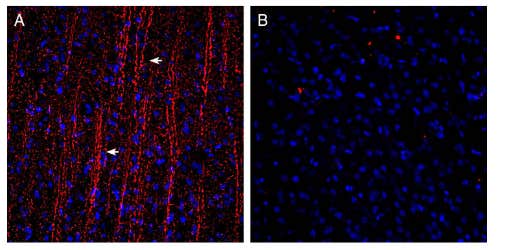 A Guinea Pig Polyclonal Antibody to P2Y12 Receptor
- Product Code: APR-020-GP
- Short Description: A Guinea Pig Polyclonal Antibody to P2Y12 Receptor
- Host: Guinea Pig
- Label: Unconjugated
- Reactivity: Human, Rat, Mouse
- Applications: Live cell imaging, Western blot, Immunocytochemistry, Immunofluorescence, Immunohistochemistry
- Target: P2Y purinoceptor 12, P2RY12, ADP-glucose receptor, Platelet ADP receptor, HORK3
-
 A Guinea Pig Polyclonal Antibody to TrkB
- Product Code: ANT-019-GP
- Short Description: A Guinea Pig Polyclonal Antibody to TrkB
- Host: Guinea Pig
- Label: Unconjugated
- Reactivity: Human, Rat, Mouse
- Applications: Western blot, Immunohistochemistry
- Target: Neurotrophic tyrosine kinase receptor type 2, NTRK2, BDNF/NT-3 growth factors receptor, TrkB Tyrosine Kinase
-
 A Guinea Pig Polyclonal Antibody to TRPA1 (extracellular)
- Product Code: ACC-037-GP
- Short Description: A Guinea Pig Polyclonal Antibody to TRPA1 (extracellular)
- Host: Guinea Pig
- Label: Unconjugated
- Reactivity: Human, Rat, Mouse
- Applications: Western blot, Immunohistochemistry
- Target: Transient receptor potential cation channel subfamily A member 1, ANKTM1, Ankyrin-like with transmembrane domains protein 1, Transformation-sensitive protein p120, Wasabi Receptor
-
 A Guinea Pig Polyclonal Antibody to TRPV2 (VRL1) Channel
- Product Code: ACC-039-GP
- Short Description: A Guinea Pig Polyclonal Antibody to TRPV2 (VRL1) Channel
- Host: Guinea Pig
- Label: Unconjugated
- Reactivity: Rat, Mouse
- Applications: Live cell imaging, Western blot, Immunocytochemistry, Immunofluorescence, Immunohistochemistry
- Target: Transient receptor potential cation channel subfamily V member 2, Vanilloid receptor-like protein 1, VRL-1, Osm-9-like TRP channel 2, OTRPC2, Stretch-activated channel 2B, SAC2B
Loading...