An Overlooked Opportunity
Ion channel drug development remains vastly underrepresented, even though ion channels are critical in diseases ranging from chronic pain and epilepsy to glioblastoma and autoimmune syndromes. This gap persists not because ion channels lack therapeutic potential, but because drug discovery efforts have followed the path of least resistance.
As of 2022, approximately 34% of FDA-approved drugs target G protein–coupled receptors (GPCRs) and cover over 100 unique proteins (1). Ion channels, by contrast, represent a far smaller slice of the drug market – despite their direct involvement in dozens of common and severe diseases.
The GPCR Dominance
GPCRs are the most drug-targeted protein family in the human genome. In the latest count from 2022, 121 GPCRs were targeted by FDA-approved drugs, spanning indications in cardiovascular disease, metabolic disorders, and psychiatry (2). More than 300 additional GPCR-directed agents are in clinical development (1), aided by decades of investment in tools like cryogenic electron microscopy (cryo-EM), crystallography, and structure-based virtual screening (3).
High-resolution GPCR structural analysis has resulted in over 500 unique structures, which has driven innovation in allosteric modulation, biased signaling, and antibody therapeutics (4). What’s more, these structural data and improvements in biophysical and stabilization assays have sustained a feedback loop: success has led to more investment, which in turn has yielded more tractable targets.
The Ion Channel Gap
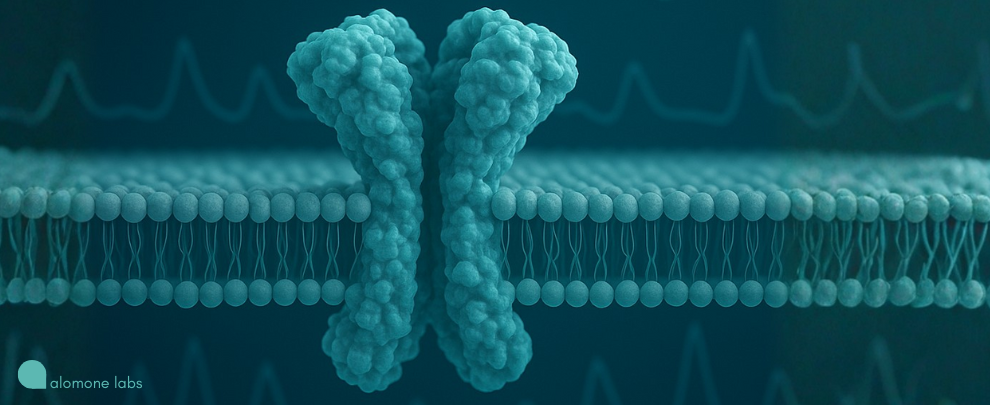
Ion channels, on the other hand, despite being biologically essential and pharmacologically validated, remain underexploited. They regulate membrane excitability, immune signaling, muscle contraction, and tumor migration. But relative to GPCRs, few ion channel drugs have reached the clinic – most were developed decades ago.
The gap is especially stark in areas of high unmet need. NaV1.7 channel is a genetically validated pain target, yet no selective modulator has achieved lasting success (5, 6). Ion channel dysregulation in glioblastoma, cardiac arrhythmias, and epilepsy also remains largely unaddressed by targeted therapies (7-12).
This underrepresentation is not a result of limited utility. In a 2015 review of drug target classes, ion channels were identified as a significantly under targeted family compared to GPCRs and kinases, despite broad disease relevance (13).
Why the Imbalance Exists
The short answer here is that GPCRs lend themselves to scalable discovery platforms. Their signaling cascades can be measured using robust, high-throughput readouts such as cAMP accumulation assays, which track changes in intracellular cyclic AMP, or calcium flux assays, which detect transient rises in cytosolic Ca²⁺ using fluorescent indicators. Coupled with stable expression systems and ready-made reporter lines, GPCR screening accelerated throughout the 1990s and early 2000s (2, 3, 14).
In contrast, ion channels require complex multimeric assembly and strict localization. Their gating properties are dynamic and voltage-dependent. Native function of ion channels often relies on tissue-specific splice variants, trafficking signals, and accessory proteins (15). Standard systems, like HEK293 cell line, lack this context, which limits both expression fidelity and functional output.
GPCR structural biology has also outpaced that of ion channels. While over 500 GPCR structures are available, ion channel structures are fewer, often missing endogenous regulators or ligand-bound states (3, 14, 15).
The Case for Shifting Focus
Industry preference for GPCRs reflects historical tractability, not a fixed advantage. Ion channels have been left behind not because they are less relevant, but because early screening and structural technologies weren’t designed with them in mind. But that’s starting to change: advances in cryo-EM have allowed for structural determination of full-length ion channel complexes. Genetically encoded sensors and optogenetic actuators are improving functional assays. And new electrophysiology platforms offer medium-throughput formats with direct readouts.
From a clinical perspective, the rationale is strong. Ion channels are involved in pain, epilepsy, stroke, cancer, cardiac function, and autoimmune regulation – and their roles are often causal. If the field commits the same level of investment and innovation applied to the GPCR technologies, these targets can deliver.
Investors, funders, and translational researchers need to look at ion channels not as the next GPCRs, but as a separate and underexploited class of drug targets. The only real barriers are now technical, and they are starting to fall.