
-

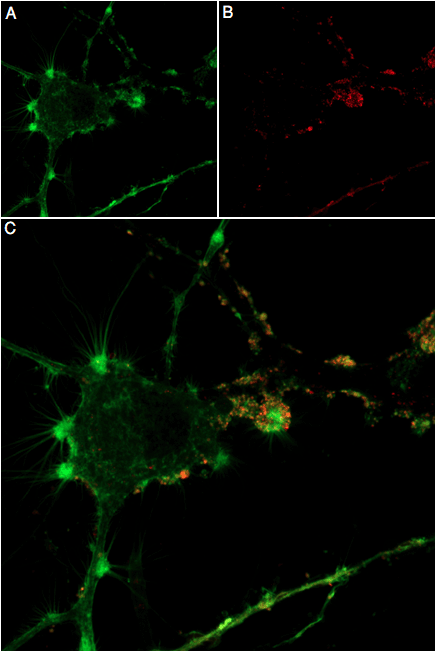
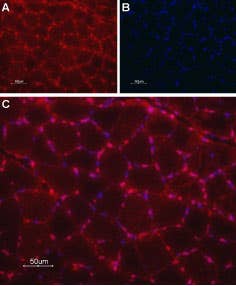
 A Rabbit Polyclonal Antibody to HCN2 Conjugated to the Fluorescent Dye ATTO-594
- Product Code: APC-030-AR
- Short Description: A Rabbit Polyclonal Antibody to HCN2 Conjugated to the Fluorescent Dye ATTO-594
- Host: Rabbit
- Label: ATTO 594
- Reactivity: Human, Rat, Mouse
- Applications: Immunofluorescence, Immunohistochemistry
- Target: Hyperpolarization-activated cyclic nucleotide-gated potassium channel 2, BCNG2, HAC-1
-
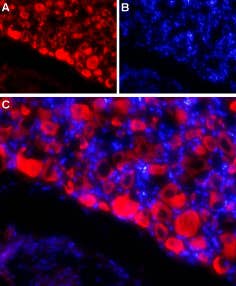
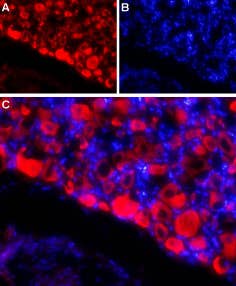
 A Rabbit Polyclonal Antibody to HCN3 Channel
- Product Code: APC-083
- Short Description: A Rabbit Polyclonal Antibody to HCN3 Channel
- Host: Rabbit
- Label: Unconjugated
- Reactivity: Human, Rat, Mouse
- Applications: Live cell imaging, Western blot, Immunocytochemistry, Immunofluorescence
- Target: K+/Na+ Hyperpolarization-activated cyclic nucleotide-gated channel 3, BCNG4, Hac3
-
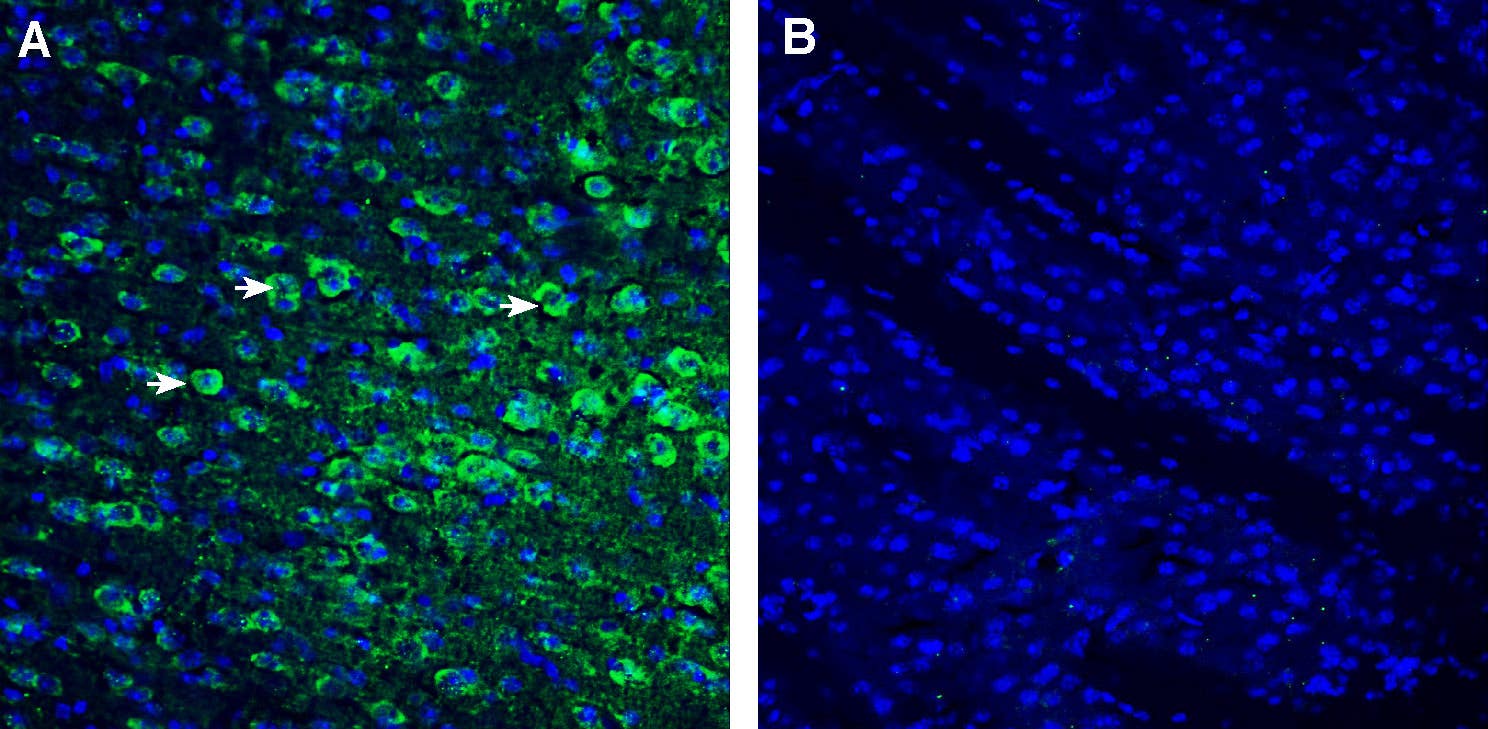
 A Rabbit Polyclonal Antibody to HCN3 Channel
- Product Code: APC-057
- Short Description: A Rabbit Polyclonal Antibody to HCN3 Channel
- Host: Rabbit
- Label: Unconjugated
- Reactivity: Human, Rat, Mouse
- Applications: Western blot, Immunofluorescence, Immunohistochemistry
- Target: K+/Na+ Hyperpolarization-activated cyclic nucleotide-gated channel 3, BCNG4, Hac3
-
 A Rabbit Polyclonal Antibody to HCN4 Channel
- Product Code: APC-052
- Short Description: A Rabbit Polyclonal Antibody to HCN4 Channel
- Host: Rabbit
- Label: Unconjugated
- Reactivity: Human, Rat, Mouse
- Applications: Western blot, Immunocytochemistry, Immunofluorescence, Immunoprecipitation, Immunohistochemistry
- Target: Hyperpolarization-activated cyclic nucleotide-gated potassium channel 4
-
 A Rabbit Polyclonal Antibody to Multidrug Resistance Protein 1
- Product Code: AMT-021
- Short Description: A Rabbit Polyclonal Antibody to Multidrug Resistance Protein 1
- Host: Rabbit
- Label: Unconjugated
- Reactivity: Human
- Applications: Western blot
- Target: Multidrug resistance protein 1, ATP-binding cassette sub-family B (MDR/TAP) member 1, P-glycoprotein 1, P-gp, PGY1, ABC20, CD243, CLCS, Colchicin sensitivity, Doxorubicin resistance, GP170
-
 A Rabbit Polyclonal Antibody to BLT1
- Product Code: ALR-001
- Short Description: A Rabbit Polyclonal Antibody to BLT1
- Host: Rabbit
- Label: Unconjugated
- Reactivity: Human
- Applications: Indirect flow cytometry, Western blot
- Target: Leukotriene B4 receptor 1, LTB4R, LTB4R1, CMKRL1, GPR16, P2Y7, P2RY7
-
 A Rabbit Polyclonal Antibody to BLT1 Conjugated to the Fluorescent Dye ATTO-488
- Product Code: ALR-001-AG
- Short Description: A Rabbit Polyclonal Antibody to BLT1 Conjugated to the Fluorescent Dye ATTO-488
- Host: Rabbit
- Label: ATTO 488
- Reactivity: Human
- Applications: Flow cytometry
- Target: Leukotriene B4 receptor 1, LTB4R, LTB4R1, CMKRL1, GPR16, P2Y7, P2RY7
-
 A Rabbit Polyclonal Antibody to Human CaV1.2 (CACNA1C) Channel
- Product Code: ACC-022
- Short Description: A Rabbit Polyclonal Antibody to Human CaV1.2 (CACNA1C) Channel
- Host: Rabbit
- Label: Unconjugated
- Reactivity: Human, Rat, Mouse
- Applications: Western blot, Immunocytochemistry, Immunofluorescence
- Target: Human α1C, Voltage-dependent L-type calcium channel subunit alpha-1C.
-
 A Rabbit Polyclonal Antibody to CCR2 Receptor
- Product Code: ACR-022
- Short Description: A Rabbit Polyclonal Antibody to CCR2 Receptor
- Host: Rabbit
- Label: Unconjugated
- Reactivity: Human
- Applications: Indirect flow cytometry, Live cell imaging, Western blot
- Target: C-C chemokine receptor type 2, Monocyte chemoattractant protein 1 receptor, MCP-1 receptor, CC-CKR-2, CD192
-
 A Rabbit Polyclonal Antibody to CCR3 Chemokine Receptor
- Product Code: ACR-023
- Short Description: A Rabbit Polyclonal Antibody to CCR3 Chemokine Receptor
- Host: Rabbit
- Label: Unconjugated
- Reactivity: Human
- Applications: Indirect flow cytometry, Live cell imaging, Western blot
- Target: C-C chemokine receptor type 3, Eosinophil eotaxin receptor, CKR3, C-C CKR-3, CMKBR3, B-chemokine receptor, CD193 antigen
Loading...