
-
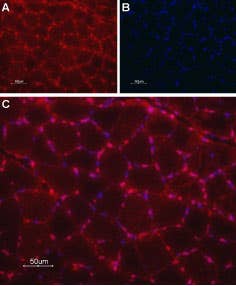
 A Rabbit Polyclonal antibody to GPR50
- Product Code: AGR-061
- Short Description: A Rabbit Polyclonal antibody to GPR50
- Host: Rabbit
- Label: Unconjugated
- Reactivity: Rat, Mouse
- Applications: Western blot
- Target: G Protein-Coupled Receptor 50, Melatonin-Related Receptor
-
 A Rabbit Polyclonal Antibody to GPR68 (OGR1)
- Product Code: AGR-042
- Short Description: A Rabbit Polyclonal Antibody to GPR68 (OGR1)
- Host: Rabbit
- Label: Unconjugated
- Reactivity: Human, Rat, Mouse
- Applications: Indirect flow cytometry, Live cell imaging, Western blot
- Target: Acid-sensing G-protein coupled receptor 68, Ovarian cancer G-protein coupled receptor 1, Sphingosylphosphorylcholine receptor
-
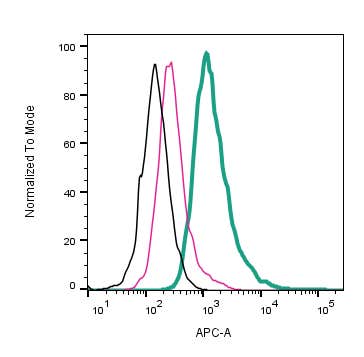 A Rabbit Polyclonal Antibody to GPR68 (extracellular) conjugated to the fluorescent dye Allophycocyanin (APC)
- Product Code: AGR-042-APC
- Short Description: A Rabbit Polyclonal Antibody to GPR68 (extracellular) conjugated to the fluorescent dye Allophycocyanin (APC)
- Host: Rabbit
- Label: APC
- Reactivity: Human, Rat, Mouse
- Applications: Live cell imaging, Flow cytometry
- Target: Acid-sensing G-protein coupled receptor 68, Ovarian cancer G-protein coupled receptor 1, Sphingosylphosphorylcholine receptor, AI2A6
-
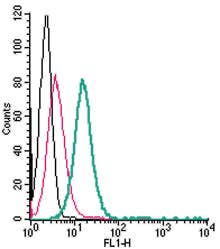 A Rabbit Polyclonal Antibody to GPR68 Conjugated to the Fluorescent Dye FITC
- Product Code: AGR-042-F
- Short Description: A Rabbit Polyclonal Antibody to GPR68 Conjugated to the Fluorescent Dye FITC
- Host: Rabbit
- Label: FITC
- Reactivity: Human, Rat, Mouse
- Applications: Live cell imaging, Flow cytometry
- Target: Acid-sensing G-protein coupled receptor 68, Ovarian cancer G-protein coupled receptor 1, Sphingosylphosphorylcholine receptor
-
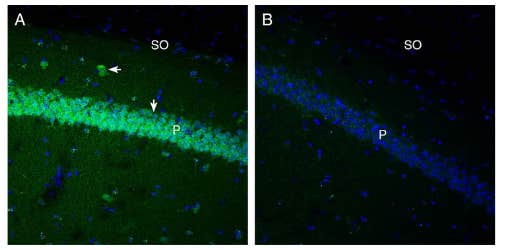 A Rabbit Polyclonal Antibody to Succinate Receptor 1
- Product Code: ASR-090
- Short Description: A Rabbit Polyclonal Antibody to Succinate Receptor 1
- Host: Rabbit
- Label: Unconjugated
- Reactivity: Human, Rat, Mouse
- Applications: Indirect flow cytometry, Live cell imaging, Western blot, Immunohistochemistry
- Target: G-protein coupled receptor 91, Succinate receptor 1
-
 A Rabbit Polyclonal Antibody to GPR91 Conjugated to the Fluorescent Dye FITC
- Product Code: ASR-090-F
- Short Description: A Rabbit Polyclonal Antibody to GPR91 Conjugated to the Fluorescent Dye FITC
- Host: Rabbit
- Label: FITC
- Reactivity: Human, Rat, Mouse
- Applications: Live cell imaging, Flow cytometry
- Target: G-protein coupled receptor 91, Succinate receptor 1
-
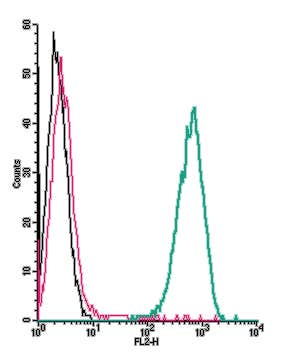 A Rabbit Polyclonal Antibody to GPR91 (SUCNR1) (extracellular) conjugated to the fluorescent dye Phycoerythrin (PE)
- Product Code: ASR-090-PE
- Short Description: A Rabbit Polyclonal Antibody to GPR91 (SUCNR1) (extracellular) conjugated to the fluorescent dye Phycoerythrin (PE)
- Host: Rabbit
- Label: R-PE
- Reactivity: Human, Rat, Mouse
- Applications: Live cell imaging, Flow cytometry
- Target: G-protein coupled receptor 91, Succinate receptor 1
-
 A Rabbit Polyclonal antibody to GPR97 (ADGRG3) (extracellular)
- Product Code: AGR-057
- Short Description: A Rabbit Polyclonal antibody to GPR97 (ADGRG3) (extracellular)
- Host: Rabbit
- Label: Unconjugated
- Reactivity: Human, Rat, Mouse
- Applications: Indirect flow cytometry, Live cell imaging, Western blot, Immunohistochemistry
- Target: Adhesion G Protein-Coupled Receptor G3, G-protein coupled receptor 97
-

 A Rabbit Polyclonal Antibody to HCN1 Channel
- Product Code: APC-056
- Short Description: A Rabbit Polyclonal Antibody to HCN1 Channel
- Host: Rabbit
- Label: Unconjugated
- Reactivity: Human, Rat, Mouse
- Applications: Western blot, Immunocytochemistry, Immunofluorescence, Immunohistochemistry
- Target: Hyperpolarization-activated cyclic nucleotide-gated potassium channel 1, HAC2, Brain cyclic nucleotide-gated channel 1, BCNG1, Potassium/sodium hyperpolarization-activated cyclic nucleotide-gated channel 1
-
 A Rabbit Polyclonal Antibody to HCN2 Channel
- Product Code: APC-030
- Short Description: A Rabbit Polyclonal Antibody to HCN2 Channel
- Host: Rabbit
- Label: Unconjugated
- Reactivity: Human, Rat, Mouse
- Applications: Western blot, Immunocytochemistry, Immunofluorescence, Immunoprecipitation, Immunohistochemistry
- Target: Hyperpolarization-activated cyclic nucleotide-gated potassium channel 2, BCNG2, HAC-1
Loading...