

-

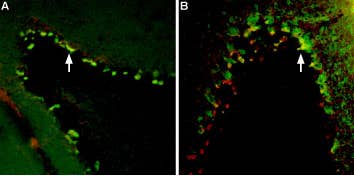
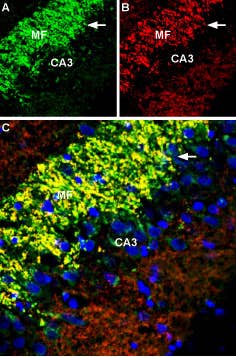
 A Rabbit Polyclonal Antibody to GIRK2 (Kir3.2) Channel
- Product Code: APC-006
- Short Description: A Rabbit Polyclonal Antibody to GIRK2 (Kir3.2) Channel
- Host: Rabbit
- Label: Unconjugated
- Reactivity: Human, Rat, Mouse
- Applications: Western blot, Immunocytochemistry, Immunofluorescence, Immunoprecipitation, Immunohistochemistry
- Target: G protein-activated inward rectifier potassium channel 2, Kcnj6
-
 A Rabbit Polyclonal Antibody to Glucagon-like Peptide 1 Receptor
- Product Code: AGR-021
- Short Description: A Rabbit Polyclonal Antibody to Glucagon-like Peptide 1 Receptor
- Host: Rabbit
- Label: Unconjugated
- Reactivity: Human, Rat, Mouse
- Applications: Indirect flow cytometry, Live cell imaging, Western blot, Immunocytochemistry, Immunofluorescence, Immunohistochemistry
- Target: Glucagon-like peptide 1 receptor, GLP-1 receptor
-
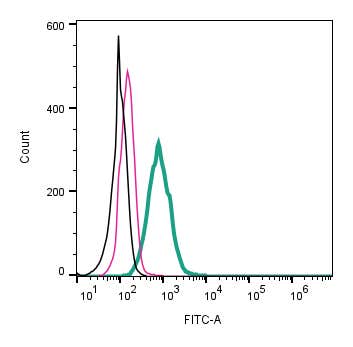 A Rabbit Polyclonal Antibody to Glucagon-like Peptide 1 Receptor Conjugated to the Fluorescent Dye FITC
- Product Code: AGR-021-F
- Short Description: A Rabbit Polyclonal Antibody to Glucagon-like Peptide 1 Receptor Conjugated to the Fluorescent Dye FITC
- Host: Rabbit
- Label: FITC
- Reactivity: Human, Rat, Mouse
- Applications: Live cell imaging, Flow cytometry
- Target: Glucagon-like peptide 1 receptor, GLP-1 receptor
-
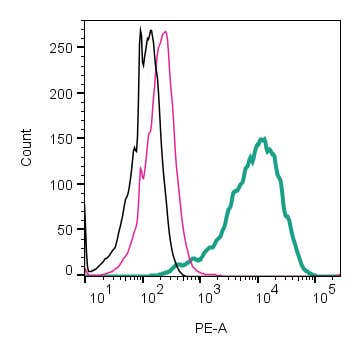 A Rabbit Polyclonal Antibody to GLP1R conjugated to R-Phycoerythrin (R-PE) fluorophore
- Product Code: AGR-021-PE
- Short Description: A Rabbit Polyclonal Antibody to GLP1R conjugated to R-Phycoerythrin (R-PE) fluorophore
- Host: Rabbit
- Label: R-PE
- Reactivity: Human, Rat, Mouse
- Applications: Live cell imaging, Flow cytometry
- Target: Glucagon-like peptide 1 receptor, GLP-1 receptor
-
 A Rabbit Polyclonal Antibody to AMPA-Selective Glutamate Receptor 1 (GluR1)
- Product Code: AGC-004
- Short Description: A Rabbit Polyclonal Antibody to AMPA-Selective Glutamate Receptor 1 (GluR1)
- Host: Rabbit
- Label: Unconjugated
- Reactivity: Human, Rat, Mouse
- Applications: Live cell imaging, Western blot, Immunocytochemistry, Immunofluorescence, Immunohistochemistry
- Target: AMPA Receptor 1, Glutamate receptor 1, Ionotropic glutamate receptor 1, AMPA-selective glutamate receptor 1, GRIA1, GluR-A, GluR-K1
-
 A Rabbit Polyclonal Antibody to AMPA-Selective Glutamate Receptor 1 (GluR1) Conjugated to the Fluorescent Dye ATTO-594
- Product Code: AGC-004-AR
- Short Description: A Rabbit Polyclonal Antibody to AMPA-Selective Glutamate Receptor 1 (GluR1) Conjugated to the Fluorescent Dye ATTO-594
- Host: Rabbit
- Label: ATTO 594
- Reactivity: Human, Rat, Mouse
- Applications: Live cell imaging, Immunocytochemistry, Immunofluorescence
- Target: AMPA Receptor 1, Glutamate receptor 1, Ionotropic glutamate receptor 1, AMPA-selective glutamate receptor 1, GRIA1, GluR-A, GluR-K1
-
 A Rabbit Polyclonal Antibody to AMPA-Selective Glutamate Receptor 2 (GluR2)
- Product Code: AGC-005
- Short Description: A Rabbit Polyclonal Antibody to AMPA-Selective Glutamate Receptor 2 (GluR2)
- Host: Rabbit
- Label: Unconjugated
- Reactivity: Rat, Mouse
- Applications: Live cell imaging, Western blot, Immunocytochemistry, Immunofluorescence, Immunoprecipitation, Immunohistochemistry
- Target: AMPA receptor 2, Glutamate receptor 2, Ionotropic glutamate receptor 2, AMPA-selective glutamate receptor 2, GRIA2, GluR-B, GluR-K2
-
 A Rabbit Polyclonal Antibody to AMPA-Selective Glutamate Receptor 2 (GluR2) Conjugated to the Fluorescent Dye ATTO-488
- Product Code: AGC-005-AG
- Short Description: A Rabbit Polyclonal Antibody to AMPA-Selective Glutamate Receptor 2 (GluR2) Conjugated to the Fluorescent Dye ATTO-488
- Host: Rabbit
- Label: ATTO 488
- Reactivity: Rat, Mouse
- Applications: Immunofluorescence, Immunohistochemistry
- Target: AMPA receptor 2, Glutamate receptor 2, Ionotropic glutamate receptor 2, AMPA-selective glutamate receptor 2, GRIA2, GluR-B, GluR-K2
-
 A Rabbit Polyclonal Antibody to AMPA-Selective Glutamate Receptor 3 (GluR3)
- Product Code: AGC-010
- Short Description: A Rabbit Polyclonal Antibody to AMPA-Selective Glutamate Receptor 3 (GluR3)
- Host: Rabbit
- Label: Unconjugated
- Reactivity: Human, Rat, Mouse
- Applications: Live cell imaging, Western blot, Immunocytochemistry, Immunofluorescence, Immunoprecipitation, Immunohistochemistry
- Target: AMPA receptor 3, Glutamate receptor 3, Ionotropic glutamate receptor 3, AMPA-selective glutamate receptor 3, GRIA3, GluR-C, GluR-K3
-
 A Rabbit Polyclonal Antibody to AMPA-Selective Glutamate Receptor 4 (GluR4)
- Product Code: AGC-019
- Short Description: A Rabbit Polyclonal Antibody to AMPA-Selective Glutamate Receptor 4 (GluR4)
- Host: Rabbit
- Label: Unconjugated
- Reactivity: Human, Rat, Mouse
- Applications: Western blot, Immunofluorescence, Immunohistochemistry
- Target: AMPA Receptor 4, Glutamate receptor 4, Ionotropic glutamate receptor 4, AMPA-selective glutamate receptor 4, GRIA4, GluR-D
Loading...