

-
 A Rabbit Polyclonal Antibody to Vesicular Acetylcholine Transporter
- Product Code: ACT-003
- Short Description: A Rabbit Polyclonal Antibody to Vesicular Acetylcholine Transporter
- Host: Rabbit
- Label: Unconjugated
- Reactivity: Rat, Mouse
- Applications: Western blot, Immunofluorescence, Immunohistochemistry
- Target: Solute carrier family 18 member 3, SLC18A3
-
 A Rabbit Polyclonal Antibody to Vesicular GABA Transporter
- Product Code: AGT-005
- Short Description: A Rabbit Polyclonal Antibody to Vesicular GABA Transporter
- Host: Rabbit
- Label: Unconjugated
- Reactivity: Human, Rat, Mouse
- Applications: Western blot, Immunocytochemistry, Immunofluorescence, Immunohistochemistry
- Target: Vesicular inhibitory amino acid transporter, VIAAT, GABA and glycine transporter, SLC32A1
-
 A Rabbit Polyclonal Antibody to Vesicular GABA Transporter Conjugated to the Fluorescent Dye ATTO-594
- Product Code: AGT-005-AR
- Short Description: A Rabbit Polyclonal Antibody to Vesicular GABA Transporter Conjugated to the Fluorescent Dye ATTO-594
- Host: Rabbit
- Label: ATTO 594
- Reactivity: Human, Rat, Mouse
- Applications: Immunofluorescence, Immunohistochemistry
- Target: Vesicular inhibitory amino acid transporter, VIAAT, GABA and glycine transporter, SLC32A1
-
 A Rabbit Polyclonal Antibody to Vesicular Glutamate Transporter 1
- Product Code: AGC-035
- Short Description: A Rabbit Polyclonal Antibody to Vesicular Glutamate Transporter 1
- Host: Rabbit
- Label: Unconjugated
- Reactivity: Human, Rat, Mouse
- Applications: Western blot, Immunofluorescence, Immunohistochemistry
- Target: Vesicular glutamate transporter 1, Brain-specific Na+-dependent inorganic phosphate cotransporter, BNPI, SLC17A7
-
 A Rabbit Polyclonal Antibody to Vesicular Glutamate Transporter 2
- Product Code: AGC-036
- Short Description: A Rabbit Polyclonal Antibody to Vesicular Glutamate Transporter 2
- Host: Rabbit
- Label: Unconjugated
- Reactivity: Human, Rat, Mouse
- Applications: Western blot, Immunofluorescence, Immunohistochemistry
- Target: Vesicular glutamate transporter 2, Differentiation-associated Na+-dependent inorganic phosphate cotransporter, DNPI, SLC17A6
-
 A Rabbit Polyclonal Antibody to Vesicular Glutamate Transporter 2 Conjugated to the Fluorescent Dye ATTO-594
- Product Code: AGC-036-AR
- Short Description: A Rabbit Polyclonal Antibody to Vesicular Glutamate Transporter 2 Conjugated to the Fluorescent Dye ATTO-594
- Host: Rabbit
- Label: ATTO 594
- Reactivity: Human, Rat, Mouse
- Applications: Immunofluorescence, Immunohistochemistry
- Target: Vesicular glutamate transporter 2, Differentiation-associated Na+-dependent inorganic phosphate cotransporter, DNPI, SLC17A6
-
 A Rabbit Polyclonal Antibody to Vesicular Glutamate Transporter 3
- Product Code: AGC-037
- Short Description: A Rabbit Polyclonal Antibody to Vesicular Glutamate Transporter 3
- Host: Rabbit
- Label: Unconjugated
- Reactivity: Rat, Mouse
- Applications: Western blot, Immunofluorescence, Immunohistochemistry
- Target: Vesicular glutamate transporter 3, SLC17A8
-
 A Rabbit Polyclonal Antibody to VPAC1 Receptor
- Product Code: AVR-001
- Short Description: A Rabbit Polyclonal Antibody to VPAC1 Receptor
- Host: Rabbit
- Label: Unconjugated
- Reactivity: Human, Rat, Mouse
- Applications: Indirect flow cytometry, Live cell imaging, Western blot, Immunocytochemistry, Immunofluorescence, Immunohistochemistry
- Target: VIP and PACAP receptor 1, Vasoactive intestinal polypeptide receptor 1, Pituitary adenylate cyclase-activating polypeptide type II receptor, PACAP type II receptor, PACAP-R2
-
 A Rabbit Polyclonal Antibody to VPAC1 Receptor Conjugated to the Fluorescent Dye FITC
- Product Code: AVR-001-F
- Short Description: A Rabbit Polyclonal Antibody to VPAC1 Receptor Conjugated to the Fluorescent Dye FITC
- Host: Rabbit
- Label: FITC
- Reactivity: Human, Rat, Mouse
- Applications: Live cell imaging, Flow cytometry
- Target: VIP and PACAP receptor 1, Vasoactive intestinal polypeptide receptor 1, Pituitary adenylate cyclase-activating polypeptide type II receptor, PACAP type II receptor, PACAP-R2
-
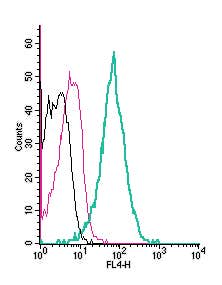 A Rabbit Polyclonal Antibody to VPAC2 Receptor
- Product Code: AVR-002
- Short Description: A Rabbit Polyclonal Antibody to VPAC2 Receptor
- Host: Rabbit
- Label: Unconjugated
- Reactivity: Human, Rat, Mouse
- Applications: Indirect flow cytometry, Live cell imaging, Western blot, Immunocytochemistry, Immunofluorescence
- Target: VIP and PACAP receptor 2, Vasoactive intestinal polypeptide receptor 2, Helodermin-preferring VIP receptor, Pituitary adenylate cyclase-activating polypeptide type III receptor, PACAP type III receptor, PACAP-R3
Loading...