Photo by Julia Koblitz
Some new some less new research in this Research Roundup. We take a look at cardiomyocyte reprogramming to possibly healthier states, and then try to discern a mechanism underlying epileptogenesis. Finally, we have some lovely research that made the cover of Science Signaling from 2019.
Reprogramming Cardiomyocytes to a Younger State with Radiotherapy to Tackle Tachycardia
Catheter ablation is often used to remedy ventricular tachycardia. But this research suggests noninvasive radiation can reprogram the heart muscle cells to a younger and healthier state, fixing conduction problems in the cell, without the need to induce fibrosis. The team identified cardiomyocyte Notch signaling as the potential mechanism to allow radiation may reprogram conduction and discuss possible therapeutic reprogramming of ventricular cardiomyocytes to a pro-conduction phenotype that prevents electrical reentry.
Featured Product:
Anti-NaV1.5 (SCN5A) (493-511) Antibody (#ASC-005) for immunohistochemistry and immunoblotting.
AMPA Receptors Play a Critical Role in Epileptic Seizure-Induced Synaptic Plasticity
We know that seizures in those living with epilepsy induce neural remodeling, and that synaptic plasticity may be involved in epileptogenesis but the mechanisms behind this are unclear. Using a 4-aminopyridine model of epileptiform activity in rat brain tissue, the researchers saw hippocampal hyper-excitability over one or more hours, along with an increased AMPA/NMDA ratio. The data suggest that changes in the postsynaptic glutamatergic receptors are the main mechanism behind the elevation in basic synaptic transmission. Could postsynaptic glutamatergic receptor modulation be a potential therapy?
Find out more in this exciting preprint.
Featured Products:
- (+)-MK 801 maleate (#M-230) to selectively block NMDA receptor channels.
- Tetrodotoxin citrate free (#T-500) to selectively block NaV channels.
Myofibroblast Transdifferentiation Needs TRPV4 and PI3Kγ
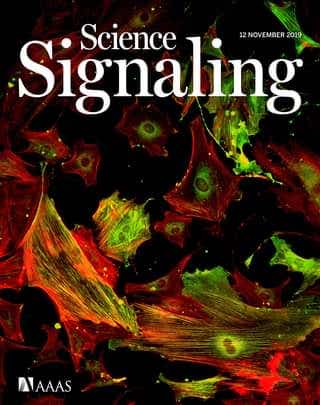
A slightly older piece of research from 2019 that you should check out if you haven’t. Scientists found that TGF-β–dependent, profibrotic signaling by the mechanosensitive ion channel TRPV4 requires TRPV4-PI3Kγ complexes at the plasma membrane. The team showed that TRPV4 and PI3Kγ are both required to induce myofibroblast transdifferentiation upon TGF-β stimulation by using gain-of-function methods in TRPV4- or PI3Kγ-deficient cells.
The story made the cover of Science Signaling and you can go check out the full story there.
Featured Product:
Anti-TRPV4 Antibody (#ACC-034) for immunocytochemistry.