-
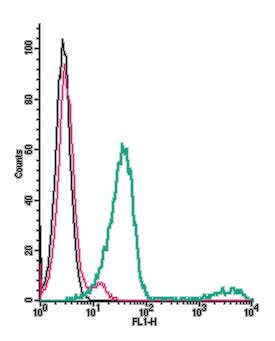 A Rabbit Polyclonal Antibody to GABBR1 (extracellular) conjugated to the fluorescent dye FITC
- Product Code: AGB-001-F
- Short Description: A Rabbit Polyclonal Antibody to GABBR1 (extracellular) conjugated to the fluorescent dye FITC
- Host: Rabbit
- Label: FITC
- Reactivity: Human, Rat, Mouse
- Applications: Live cell imaging, Flow cytometry
- Target: γ-Aminobutyric acid type B receptor subunit 1, GABA B receptor 1, GABABR1, Gb1, GABBR1, GPRC3A
-
 A Rabbit Polyclonal Antibody to GABA Receptor Associated Protein
- Product Code: AIP-016
- Short Description: A Rabbit Polyclonal Antibody to GABA Receptor Associated Protein
- Host: Rabbit
- Label: Unconjugated
- Reactivity: Human, Rat, Mouse
- Applications: Western blot, Immunohistochemistry
- Target: GABA receptor associated protein, GABARAPL
-
 A Rabbit Polyclonal Antibody to Gamma-Synuclein
- Product Code: APZ-037
- Short Description: A Rabbit Polyclonal Antibody to Gamma-Synuclein
- Host: Rabbit
- Label: Unconjugated
- Reactivity: Rat, Mouse
- Applications: Western blot, Immunofluorescence, Immunohistochemistry
- Target: γ-Synuclein, Breast Cancer-Specific Gene 1 Protein, BCSG1, Persyn, Synoretin, SNCG
-
 A Rabbit Polyclonal Antibody to GAP43
- Product Code: ANR-016
- Short Description: A Rabbit Polyclonal Antibody to GAP43
- Host: Rabbit
- Label: Unconjugated
- Reactivity: Rat, Mouse
- Applications: Western blot, Immunofluorescence, Immunohistochemistry
- Target: Axonal membrane protein GAP-43, Growth-associated protein 43, Neuromodulin, Neural phosphoprotein B-50
-
 A Rabbit Polyclonal Antibody to GDNF
- Product Code: ANT-014
- Short Description: A Rabbit Polyclonal Antibody to GDNF
- Host: Rabbit
- Label: Unconjugated
- Reactivity: Human, Rat, Mouse
- Applications: Western blot, Immunocytochemistry, Immunofluorescence, Immunohistochemistry
- Target: Glial-derived neurotrophic factor, hGDNF, Astrocyte-derived trophic factor
-
 A Rabbit Polyclonal Antibody to Glial Fibrillary Acidic Protein
- Product Code: AFP-001
- Short Description: A Rabbit Polyclonal Antibody to Glial Fibrillary Acidic Protein
- Host: Rabbit
- Label: Unconjugated
- Reactivity: Rat, Mouse
- Applications: Western blot, Immunofluorescence, Immunohistochemistry
- Target: Glial fibrillary acidic protein
-
 A Rabbit Polyclonal Antibody to GFAP conjugated to the fluorescent dye ATTO Fluor-647N
- Product Code: AFP-001-FRN
- Short Description: A Rabbit Polyclonal Antibody to GFAP conjugated to the fluorescent dye ATTO Fluor-647N
- Host: Rabbit
- Label: ATTO 647N
- Reactivity: Rat, Mouse
- Applications: Immunocytochemistry, Immunohistochemistry
- Target: Glial fibrillary acidic protein
-
 A Rabbit Polyclonal Antibody to GDNF Family Receptor α1
- Product Code: ANT-021
- Short Description: A Rabbit Polyclonal Antibody to GDNF Family Receptor α1
- Host: Rabbit
- Label: Unconjugated
- Reactivity: Human, Rat, Mouse
- Applications: Live cell imaging, Western blot, Immunocytochemistry, Immunofluorescence, Immunohistochemistry
- Target: GFRA1, GFRα1, GDNF family receptor α1, GDNF receptor alpha 1, Ret ligand 1, RETL1, TRNR1
-
 A Rabbit Polyclonal Antibody to GDNF Family Receptor α3
- Product Code: ANT-023
- Short Description: A Rabbit Polyclonal Antibody to GDNF Family Receptor α3
- Host: Rabbit
- Label: Unconjugated
- Reactivity: Rat, Mouse
- Applications: Western blot
- Target: GFRA3, GFRα3, GDNF family receptor α3, GDNF receptor alpha 3
-
 A Rabbit Polyclonal Antibody to GDNF Family Receptor α4
- Product Code: ANT-024
- Short Description: A Rabbit Polyclonal Antibody to GDNF Family Receptor α4
- Host: Rabbit
- Label: Unconjugated
- Reactivity: Rat, Mouse
- Applications: Live cell imaging, Western blot, Immunocytochemistry, Immunofluorescence, Immunohistochemistry
- Target: GFRA4, GFRα4, GDNF family receptor α4, GDNF receptor alpha 4, Persephin receptor
Loading...