-
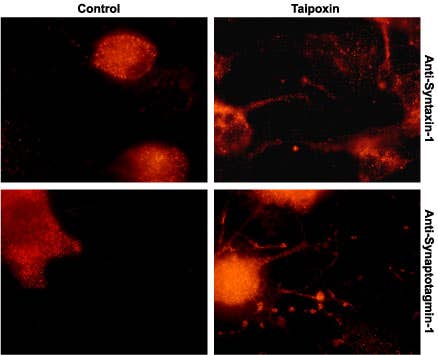
 A Rabbit Polyclonal Antibody to Vesicular Monoamine Transporter 2 Conjugated to the Fluorescent Dye ATTO-488
- Product Code: AMT-006-AG
- Short Description: A Rabbit Polyclonal Antibody to Vesicular Monoamine Transporter 2 Conjugated to the Fluorescent Dye ATTO-488
- Host: Rabbit
- Label: ATTO 488
- Reactivity: Human, Rat, Mouse
- Applications: Immunofluorescence, Immunohistochemistry
- Target: Vesicular monoamine transporter 2, SLC18A2, SVAT, VAT2
-
 A Rabbit Polyclonal Antibody to VPAC1 Receptor
- Product Code: AVR-001
- Short Description: A Rabbit Polyclonal Antibody to VPAC1 Receptor
- Host: Rabbit
- Label: Unconjugated
- Reactivity: Human, Rat, Mouse
- Applications: Indirect flow cytometry, Live cell imaging, Western blot, Immunocytochemistry, Immunofluorescence, Immunohistochemistry
- Target: VIP and PACAP receptor 1, Vasoactive intestinal polypeptide receptor 1, Pituitary adenylate cyclase-activating polypeptide type II receptor, PACAP type II receptor, PACAP-R2
-
 A Rabbit Polyclonal Antibody to VPAC1 Receptor Conjugated to the Fluorescent Dye FITC
- Product Code: AVR-001-F
- Short Description: A Rabbit Polyclonal Antibody to VPAC1 Receptor Conjugated to the Fluorescent Dye FITC
- Host: Rabbit
- Label: FITC
- Reactivity: Human, Rat, Mouse
- Applications: Live cell imaging, Flow cytometry
- Target: VIP and PACAP receptor 1, Vasoactive intestinal polypeptide receptor 1, Pituitary adenylate cyclase-activating polypeptide type II receptor, PACAP type II receptor, PACAP-R2
-
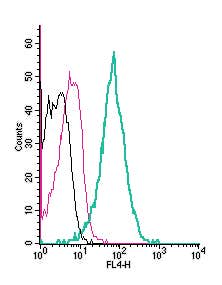 A Rabbit Polyclonal Antibody to VPAC2 Receptor
- Product Code: AVR-002
- Short Description: A Rabbit Polyclonal Antibody to VPAC2 Receptor
- Host: Rabbit
- Label: Unconjugated
- Reactivity: Human, Rat, Mouse
- Applications: Indirect flow cytometry, Live cell imaging, Western blot, Immunocytochemistry, Immunofluorescence
- Target: VIP and PACAP receptor 2, Vasoactive intestinal polypeptide receptor 2, Helodermin-preferring VIP receptor, Pituitary adenylate cyclase-activating polypeptide type III receptor, PACAP type III receptor, PACAP-R3
-

 A Rabbit Polyclonal Antibody to Cystine/Glutamate Transporter (xCT)
- Product Code: ANT-111
- Short Description: A Rabbit Polyclonal Antibody to Cystine/Glutamate Transporter (xCT)
- Host: Rabbit
- Label: Unconjugated
- Reactivity: Human, Rat, Mouse
- Applications: Indirect flow cytometry, Live cell imaging, Western blot, Immunofluorescence, Immunohistochemistry
- Target: Cystine/glutamate transporter, Amino acid transport system xc-, Solute carrier family 7 member 11, Calcium channel blocker resistance protein CCBR1
-
 A Rabbit Polyclonal Antibody to Cystine/Glutamate Transporter (xCT) Conjugated to the Fluorescent dye FITC
- Product Code: ANT-111-F
- Short Description: A Rabbit Polyclonal Antibody to Cystine/Glutamate Transporter (xCT) Conjugated to the Fluorescent dye FITC
- Host: Rabbit
- Label: FITC
- Reactivity: Human, Rat, Mouse
- Applications: Flow cytometry
- Target: Cystine/glutamate transporter, Amino acid transport system xc-, Solute carrier family 7 member 11, Calcium channel blocker resistance protein CCBR1
-
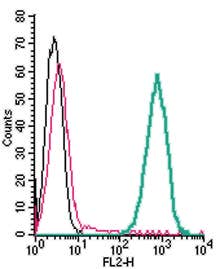 A Rabbit Polyclonal Antibody to xCT/SLC7A11 Conjugated to the Fluorescent Dye R-Phycoerythrin
- Product Code: ANT-111-PE
- Short Description: A Rabbit Polyclonal Antibody to xCT/SLC7A11 Conjugated to the Fluorescent Dye R-Phycoerythrin
- Host: Rabbit
- Label: R-PE
- Reactivity: Human, Rat, Mouse
- Applications: Flow cytometry
- Target: Cystine/glutamate transporter, Amino acid transport system xc-, Solute carrier family 7 member 11, Calcium channel blocker resistance protein CCBR1
-
 A Rabbit Polyclonal Antibody to ZIP10/SLC39A10 (extracellular)
- Product Code: AZT-010
- Short Description: A Rabbit Polyclonal Antibody to ZIP10/SLC39A10 (extracellular)
- Host: Rabbit
- Label: Unconjugated
- Reactivity: Human, Rat, Mouse
- Applications: Indirect flow cytometry, Live cell imaging, Western blot, Immunohistochemistry
- Target: Zinc transporter ZIP10, Zrt- and Irt-like protein 10, Solute Carrier Family 39 Member 10
-
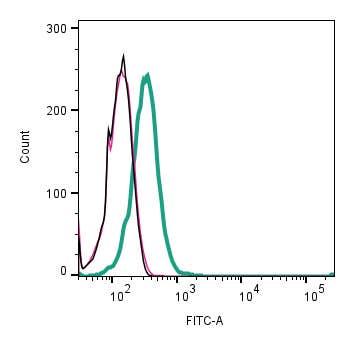 A Rabbit Polyclonal Antibody to ZIP10/SLC39A10 conjugated to fluorescein isothiocyanate (FITC) fluorophore
- Product Code: AZT-010-F
- Short Description: A Rabbit Polyclonal Antibody to ZIP10/SLC39A10 conjugated to fluorescein isothiocyanate (FITC) fluorophore
- Host: Rabbit
- Label: FITC
- Reactivity: Human, Rat, Mouse
- Applications: Live cell imaging, Flow cytometry
- Target: Zinc transporter ZIP10, Zrt- and Irt-like protein 10, Solute Carrier Family 39 Member 10
-
 A Rabbit Polyclonal Antibody to Zinc Transporter ZIP8
- Product Code: AZT-008
- Short Description: A Rabbit Polyclonal Antibody to Zinc Transporter ZIP8
- Host: Rabbit
- Label: Unconjugated
- Reactivity: Human, Rat, Mouse
- Applications: Indirect flow cytometry, Live cell imaging, Western blot, Immunofluorescence, Immunohistochemistry
- Target: Zinc transporter ZIP8, Zrt- and Irt-like protein 8, Solute carrier family 39 member 8, BIGM103
Loading...