
Immunology

Immunology

Reagents for immune-cell receptors, cytokine pathways, and inflammatory signaling.

In-house produced and validated antibodies, peptides, ligands, and modulators for research of membrane proteins expressed in immune and glial cells, including ion channels, GPCRs, cytokines, and chemokine receptors. Suitable for immunoassays like immunohistochemistry (IHC), immunocytochemistry (ICC), western blot (WB), or flow cytometry, as well as functional assays assessing activation and signaling states.

FAQs

View all FAQs >

If you can’t find the answer, please contact us.

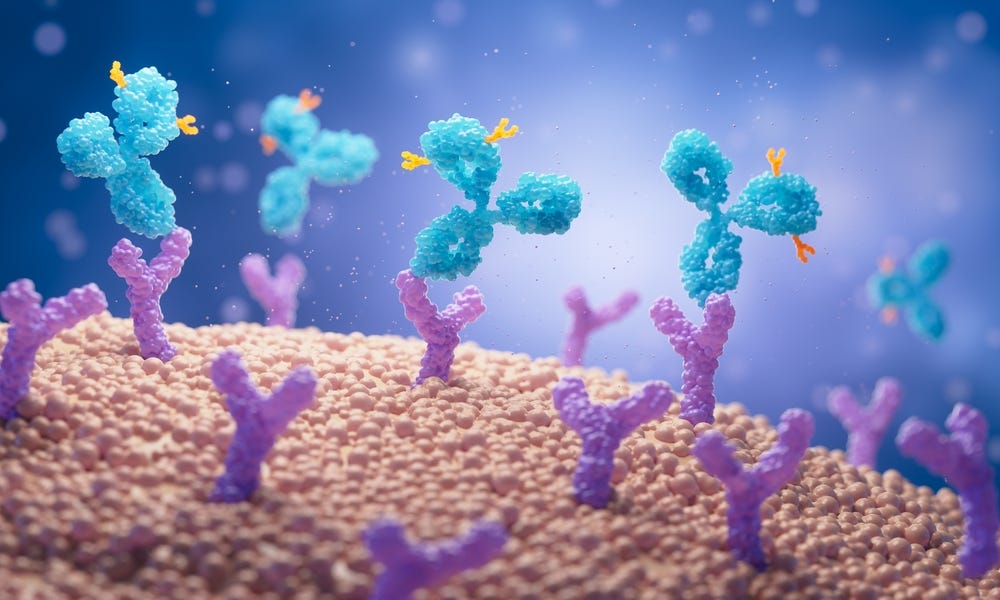
  • The blocking peptide is the antigen we use for immunization during antibody generation so that we can create an antigen-specific antibody. You can use this blocking peptide as a negative control alongside other controls in an immunoassay to give some insight into antibody specificity, but not selectivity.

    It’s important to note that the blocking peptide is not an effective control for use with live cells. If you need a control for flow cytometry, we recommend an isotype antibody control instead.

    For more details, see our guide to blocking peptides.

  • We carefully choose the epitope for immunization, taking into account two main parameters: immunogenicity and specificity of the epitope.

    Before immunization, we run a search to verify that the chosen epitope has maximum homology with other species and minimum homology among members of the same family or other proteins. After immunization and collection of sera, the antibodies are affinity-purified on immobilized antigens (the injected peptides).

    This means you shouldn’t have to worry about your antibody cross-reacting with close members of the same protein family.

  • Affinity-purified rabbit polyclonal antibodies are mainly IgGs.

  • Our reagents are shipped as stable, lyophilized powders. Before opening, we recommend centrifuging the vial (e.g., 10,000 × g for 5 minutes) to ensure all material is collected at the bottom, as the pellet can be difficult to see.

    To reconstitute, add your solvent directly to the vial to prepare a concentrated stock solution. Dissolve by gently tapping or rolling the vial. Avoid vigorous vortexing. For neurotrophins, pro-neurotrophins, and growth factors, we recommend avoiding vortexing entirely. Once dissolved, spin the vial down again and divide the solution into single-use aliquots for storage at -20°C.

    For specific protocols, please refer to the individual product page and use our Molarity Calculator.

    Solvent Selection & Guidelines

    Venom Toxins: Usually soluble in pure water (ddH₂O) at high micromolar concentrations (0.1–1 mM). While they are typically compatible with any aqueous buffer, we highly recommend preparing the initial stock solution in pure water unless stated otherwise.

    Neurotrophins & Growth Factors: Our general recommendation is to reconstitute with sterile water at a concentration of 0.1–1.0 mg/mL as a stock solution. For storage of dilute working solutions of specific proteins, we recommend adding a carrier protein (e.g., 0.1% BSA) to your buffer to prevent material loss due to protein adsorption. Always check the product-specific datasheet to ensure additives are compatible with your reagent.

    Important Handling Notes:

    We recommend preparing fresh working buffers before each use.
    Avoid multiple freeze-thaw cycles to maintain biological activity.
    Avoid heating peptides/proteins. Work at ambient room temperature and no higher than 37°C.

2177 Results
  • α-Conotoxin SI
    A potent and selective antagonist of the muscle-type nicotinic acetylcholine receptors (nAChRs)
    • Product Code: STC-825
    • Short Description: A potent and selective antagonist of the muscle-type nicotinic acetylcholine receptors (nAChRs)
    • Applications: Electrophysiology
    • CAS No.: 115797-06-3
    • MW: 1353.6 Da
  • α-Conotoxin TxID
    A potent antagonist of α3β4 nAChRs that also inhibits α6/α3β4 nicotinic acetylcholine receptors
    • Product Code: STC-110
    • Short Description: A potent antagonist of α3β4 nAChRs that also inhibits α6/α3β4 nicotinic acetylcholine receptors
    • Applications: Electrophysiology
    • CAS No.: 1496617-64-1
    • MW: 1489.8 Da
  • α-Conotoxin Vc1.1
    A potent antagonist of α9α10 nAChRs and agonist of GABA(B) receptors
    • Product Code: STV-500
    • Short Description: A potent antagonist of α9α10 nAChRs and agonist of GABA(B) receptors
    • Applications: Electrophysiology
    • CAS No.: 740980-24-9
    • MW: 1807 Da
  • α-Dendrotoxin
    A potent and selective blocker of neuronal KV1.1, KV1.2, KV1.6 potassium channels
    • Product Code: D-350
    • Short Description: A potent and selective blocker of neuronal KV1.1, KV1.2, KV1.6 potassium channels
    • Applications: Electrophysiology
    • CAS No.: 74504-53-3
    • MW: 7047 Da
  • α-Dendrotoxin-ATTO Fluor-647N
    A fluorescent probe for imaging and sensitive detection of Kv1.1, Kv1.2, and Kv1.6 channels.
    • Product Code: D-350-FRN
    • Short Description: A fluorescent probe for imaging and sensitive detection of Kv1.1, Kv1.2, and Kv1.6 channels.
    • Label: ATTO 647N
    • Applications: Electrophysiology, Direct flow cytometry, Fluorescence staining, Live cell imaging, Immunofluorescence
    • MW: ~7990 Da
  • α-Latrotoxin
    A potent inducer of massive neurotransmitter release via presynaptic neurexin and latrophilin receptors
    • Product Code: LSP-130
    • Short Description: A potent inducer of massive neurotransmitter release via presynaptic neurexin and latrophilin receptors
    • Applications: Electrophysiology, Synaptic recording
    • CAS No.: 65988-34-3
    • MW: 130 kDa
  • α-MSH
    A potent agonist for melanocortin receptors, primarily involved in pigmentation, inflammation control, and appetite regulation
    • Product Code: GPM-100
    • Short Description: A potent agonist for melanocortin receptors, primarily involved in pigmentation, inflammation control, and appetite regulation
    • Applications: Melanin production assay
    • CAS No.: 581-05-5
    • MW: 1665 Da
  • α-Pompilidotoxin
    An enhancer (modulator) of NaV currents
    • Product Code: P-170
    • Short Description: An enhancer (modulator) of NaV currents
    • Applications: Electrophysiology
    • MW: 1530 Da
  • α1A-Adrenergic Receptor (extracellular) Blocking Peptide
    A Blocking Peptide for Anti-alpha1A-Adrenergic Receptor (extracellular) Antibody
    • Product Code: BLP-AR015
    • Short Description: A Blocking Peptide for Anti-alpha1A-Adrenergic Receptor (extracellular) Antibody
    • Applications: Western blot, Immunohistochemistry
    • Target: ADRA1A
  • α1B-Adrenergic Receptor (extracellular) Blocking Peptide
    A Blocking Peptide for Anti-alpha1B-Adrenergic Receptor (extracellular) Antibody
    • Product Code: BLP-AR018
    • Short Description: A Blocking Peptide for Anti-alpha1B-Adrenergic Receptor (extracellular) Antibody
    • Applications: Western blot, Immunohistochemistry
    • Target: ADRA1B
Loading...

Have questions about our products?

Step-by-Step Protocols