-
 A Rabbit Polyclonal Antibody to NMNAT2
- Product Code: ANR-139
- Short Description: A Rabbit Polyclonal Antibody to NMNAT2
- Host: Rabbit
- Label: Unconjugated
- Reactivity: Human, Rat, Mouse
- Applications: Western blot, Immunohistochemistry
- Target: Nicotinamide mononucleotide adenylyltransferase 2, Nicotinamide Nucleotide Adenylyltransferase 2, Nicotinamide/Nicotinic Acid Mononucleotide Adenylyltransferase 2, NMN adenylyltransferase 2
-
 A Rabbit Polyclonal Antibody to Noradrenaline Transporter (NET)
- Product Code: AMT-002
- Short Description: A Rabbit Polyclonal Antibody to Noradrenaline Transporter (NET)
- Host: Rabbit
- Label: Unconjugated
- Reactivity: Rat, Mouse
- Applications: Live cell imaging, Western blot, Immunocytochemistry, Immunofluorescence, Immunohistochemistry
- Target: Sodium-dependent noradrenaline transporter, Norepinephrine transporter, SLC6A2
-
 A Rabbit Polyclonal Antibody to NPY1R
- Product Code: ANR-027
- Short Description: A Rabbit Polyclonal Antibody to NPY1R
- Host: Rabbit
- Label: Unconjugated
- Reactivity: Human, Rat, Mouse
- Applications: Indirect flow cytometry, Live cell imaging, Western blot, Immunofluorescence, Immunohistochemistry
- Target: Neuropeptide Y receptor type 1, NPYR, NPYY1
-
 A Rabbit Polyclonal Antibody to NPY1R (extracellular) conjugated to the fluorescent dye FITC
- Product Code: ANR-027-F
- Short Description: A Rabbit Polyclonal Antibody to NPY1R (extracellular) conjugated to the fluorescent dye FITC
- Host: Rabbit
- Label: FITC
- Reactivity: Human, Rat, Mouse
- Applications: Live cell imaging, Flow cytometry
- Target: Neuropeptide Y receptor type 1, NPYR, NPYY1
-
 A Rabbit Polyclonal Antibody to Neuropeptide Y1 Receptor
- Product Code: ANR-021
- Short Description: A Rabbit Polyclonal Antibody to Neuropeptide Y1 Receptor
- Host: Rabbit
- Label: Unconjugated
- Reactivity: Human, Mouse
- Applications: Western blot, Immunocytochemistry, Immunofluorescence, Immunohistochemistry
- Target: Neuropeptide Y1 receptor, Neuropeptide Y receptor type 1, NPYR, NPYY1
-
 A Rabbit Polyclonal Antibody to Neuropeptide Y2 Receptor
- Product Code: ANR-022
- Short Description: A Rabbit Polyclonal Antibody to Neuropeptide Y2 Receptor
- Host: Rabbit
- Label: Unconjugated
- Reactivity: Rat, Mouse
- Applications: Western blot, Immunocytochemistry, Immunofluorescence, Immunohistochemistry
- Target: Neuropeptide Y2 receptor, Neuropeptide Y receptor type 2, NPY Y2 receptor
-
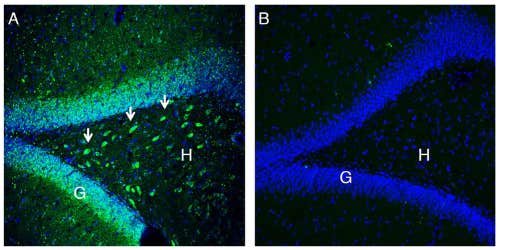 A Rabbit Polyclonal Antibody to NrCAM
- Product Code: ANR-045
- Short Description: A Rabbit Polyclonal Antibody to NrCAM
- Host: Rabbit
- Label: Unconjugated
- Reactivity: Human, Rat, Mouse
- Applications: Indirect flow cytometry, Live cell imaging, Western blot, Immunohistochemistry
- Target: Neuronal cell adhesion molecule, Nr-CAM, NgCAM-related cell adhesion molecule, Ankyrin-binding cell adhesion molecule, Neuronal surface protein Bravo, HBravo
-
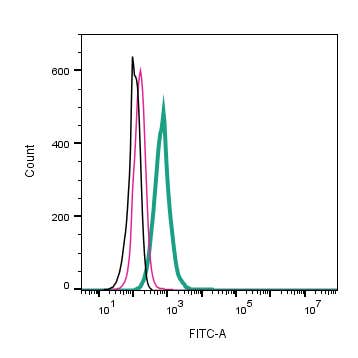 A Rabbit Polyclonal Antibody to NrCAM (extracellular) conjugated to the fluorescent dye FITC
- Product Code: ANR-045-F
- Short Description: A Rabbit Polyclonal Antibody to NrCAM (extracellular) conjugated to the fluorescent dye FITC
- Host: Rabbit
- Label: FITC
- Reactivity: Human, Rat, Mouse
- Applications: Live cell imaging, Flow cytometry
- Target: Neuronal cell adhesion molecule, Nr-CAM, NgCAM-related cell adhesion molecule, Ankyrin-binding cell adhesion molecule, Neuronal surface protein Bravo, HBravo
-
 A Rabbit Polyclonal Antibody to Neuregulin-1
- Product Code: ANR-111
- Short Description: A Rabbit Polyclonal Antibody to Neuregulin-1
- Host: Rabbit
- Label: Unconjugated
- Reactivity: Human, Rat, Mouse
- Applications: Western blot, Immunofluorescence, Immunohistochemistry
- Target: Glial growth factor, GGF, Heregulin, HRG, Sensory and motor neuron derived factor, SMDF, Neu differentiation factor, NDF
-
 A Rabbit Polyclonal Antibody to Neuregulin-1 Conjugated to the Fluorescent Dye ATTO-488
- Product Code: ANR-111-AG
- Short Description: A Rabbit Polyclonal Antibody to Neuregulin-1 Conjugated to the Fluorescent Dye ATTO-488
- Host: Rabbit
- Label: ATTO 488
- Reactivity: Mouse
- Applications: Immunofluorescence, Immunohistochemistry
- Target: Glial growth factor, GGF, Heregulin, HRG, Sensory and motor neuron derived factor, SMDF, Neu differentiation factor, NDF
Loading...