-
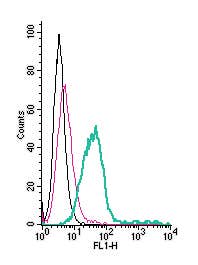 A Rabbit Polyclonal Antibody to PTGIR (extracellular) conjugated to the fluorescent dye FITC
- Product Code: APR-068-F
- Short Description: A Rabbit Polyclonal Antibody to PTGIR (extracellular) conjugated to the fluorescent dye FITC
- Host: Rabbit
- Label: FITC
- Reactivity: Human, Rat, Mouse
- Applications: Live cell imaging, Flow cytometry
- Target: Prostanoid IP receptor, Prostaglandin I2 receptor, PGI2 receptor, PRIPR
-
 A Rabbit Polyclonal Antibody to Prostanoid EP2 Receptor
- Product Code: APR-064
- Short Description: A Rabbit Polyclonal Antibody to Prostanoid EP2 Receptor
- Host: Rabbit
- Label: Unconjugated
- Reactivity: Human, Rat, Mouse
- Applications: Indirect flow cytometry, Live cell imaging, Western blot, Immunofluorescence, Immunohistochemistry
- Target: Prostaglandin E2 receptor EP2 subtype, PGE2 receptor EP2 subtype, Prostanoid EP2 receptor
-
 A Rabbit Polyclonal Antibody to Prostanoid EP2 Receptor Conjugated to the Fluorescent Dye FITC
- Product Code: APR-064-F
- Short Description: A Rabbit Polyclonal Antibody to Prostanoid EP2 Receptor Conjugated to the Fluorescent Dye FITC
- Host: Rabbit
- Label: FITC
- Reactivity: Human, Rat, Mouse
- Applications: Live cell imaging, Flow cytometry
- Target: Prostaglandin E2 receptor EP2 subtype, PGE2 receptor EP2 subtype, Prostanoid EP2 receptor
-
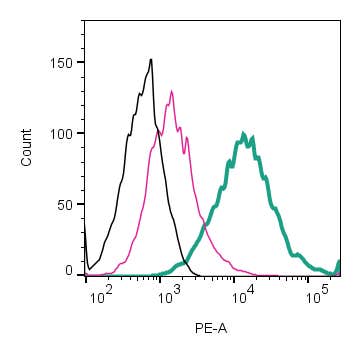 A Rabbit polyclonal antibody to Prostaglandin E Receptor EP2/PTGER2 (extracellular) conjugated to R-Phycoerythrin (R-PE) fluorophore.
- Product Code: APR-064-PE
- Short Description: A Rabbit polyclonal antibody to Prostaglandin E Receptor EP2/PTGER2 (extracellular) conjugated to R-Phycoerythrin (R-PE) fluorophore.
- Host: Rabbit
- Label: R-PE
- Reactivity: Human, Rat, Mouse
- Applications: Live cell imaging, Flow cytometry
- Target: Prostaglandin E2 receptor EP2 subtype, PGE2 receptor EP2 subtype, Prostanoid EP2 receptor
-
 A Rabbit Polyclonal antibody to the Prostanoid EP3 Receptor
- Product Code: APR-065
- Short Description: A Rabbit Polyclonal antibody to the Prostanoid EP3 Receptor
- Host: Rabbit
- Label: Unconjugated
- Reactivity: Human, Rat, Mouse
- Applications: Indirect flow cytometry, Western blot, Immunohistochemistry
- Target: Prostaglandin E2 receptor EP3 subtype, PGE2 receptor EP3 subtype, Prostanoid EP3 receptor
-
 A Rabbit Polyclonal Antibody to Prostanoid EP4 Receptor
- Product Code: APR-066
- Short Description: A Rabbit Polyclonal Antibody to Prostanoid EP4 Receptor
- Host: Rabbit
- Label: Unconjugated
- Reactivity: Human, Rat, Mouse
- Applications: Indirect flow cytometry, Western blot
- Target: Prostaglandin E2 receptor EP4 subtype, PGE2 receptor EP4 subtype, Prostanoid EP4 receptor
-
 A Rabbit Polyclonal Antibody to Prostaglandin F2-α Receptor
- Product Code: APR-067
- Short Description: A Rabbit Polyclonal Antibody to Prostaglandin F2-α Receptor
- Host: Rabbit
- Label: Unconjugated
- Reactivity: Human, Rat, Mouse
- Applications: Western blot, Immunofluorescence, Immunohistochemistry
- Target: Prostaglandin F2-alpha receptor, Prostaglandin F receptor, Prostanoid FP receptor, PGF2-alpha receptor
-

 A Rabbit Polyclonal Antibody to PSD-93
- Product Code: APZ-002
- Short Description: A Rabbit Polyclonal Antibody to PSD-93
- Host: Rabbit
- Label: Unconjugated
- Reactivity: Rat, Mouse
- Applications: Western blot, Immunocytochemistry, Immunofluorescence, Immunoprecipitation, Immunohistochemistry
- Target: Discs large homolog 2, Dlg2, Chapsyn-110
-
 A Rabbit Polyclonal Antibody to PSD-95
- Product Code: APZ-009
- Short Description: A Rabbit Polyclonal Antibody to PSD-95
- Host: Rabbit
- Label: Unconjugated
- Reactivity: Human, Rat, Mouse
- Applications: Western blot, Immunofluorescence, Immunohistochemistry
- Target: Postsynaptic density protein 95, Discs large homolog 4, DLG4, Synapse-associated protein 90, SAP-90, Tax interaction protein 15
-
 A Rabbit polyclonal antibody to PTGFRN (extracellular)
- Product Code: ANR-212
- Short Description: A Rabbit polyclonal antibody to PTGFRN (extracellular)
- Host: Rabbit
- Label: Unconjugated
- Reactivity: Human, Rat, Mouse
- Applications: Indirect flow cytometry, Live cell imaging, Western blot, Immunohistochemistry
- Target: Prostaglandin F2 Receptor Inhibitor, CD9 Partner 1, CD9P-1, FPRP, Glu-Trp-Ile EWI motif-containing protein F, EWI-F, CD315
Loading...